Supplier price increases: re-cost every dish
Supplier price increases quietly raise the cost of every dish that uses the item. Re-cost on each invoice and the dishes at risk show up early.
SyncOn team · 22 Oct 2026 · 4 min read
The invoice arrives on a Tuesday morning. Lamb is up again, and so is the cheese. Someone signs it, the boxes go into the cold room, and service starts at noon. The menu prices stay the same, the recipes stay the same, and nobody notices that every plate with lamb or cheese now earns a little less than it did on Monday. That is how supplier price increases do their damage: not in one big jump, but quietly, dish by dish, until the month-end numbers look wrong and nobody can say why.
A new price on one invoice line does not stay on that line: it travels into every recipe that uses the lamb or the cheese. The gap between the supplier's invoice and the plate is where margin is won or lost. A dish cost you worked out once, months ago, is not a cost any more. It is a memory.
Why a price rise hides so well
A dish rarely depends on one ingredient alone. Bread, garlic sauce, tomato and cheese turn up across half the menu. When one of them goes up, the change spreads into every recipe that uses it, and each dish moves by only a small amount. No single plate looks alarming, so nobody acts.
The dishes that suffer most are the ones that already leave the least. A plate that sells for a lot but costs nearly as much has very little room to absorb a rise. A cheap plate with a big gap between cost and price can carry it for a while. Without current costs, you can't tell which is which.
What good practice looks like
You can do this with a notebook, but it has to happen every time, not once a year.
- Treat every new invoice as a trigger. When a supplier's price changes, write down the item, the old price and the new one on the day the invoice arrives. Don't wait for the monthly review.
- Find every dish that uses the item. Go through your written recipes and list each dish that contains it, including the sauces and prep items made from it.
- Re-cost those dishes the same day. Quantity used times the new price, for the changed item, and add it back into each dish's total. If you have never built a full dish cost, start with how to cost a recipe line by line.
- Look at what is left on each plate. Selling price minus cost. Sort the affected dishes by that amount, smallest first. Those are the dishes to act on.
- Decide, dish by dish. For the weakest ones, check the portion, ask the supplier for a better price or an alternative, or change the price on the next menu print. For the strong ones, it is often fine to wait.
- Keep the order history. Written orders make every price change visible later. A clear purchase order process gives you the old and new price side by side.
The point is speed. A rise you catch on the day it arrives costs you one day of thinner margin. A rise you find at month-end has already cost you a month.
How this looks in SyncOn
The hardest step on paper is the first one: noticing the rise at all. In SyncOn, that step doesn't depend on someone reading every invoice. SyncOn Brain watches supplier prices around the clock, 24/7, and flags any price that goes up, so the re-costing starts the moment a price changes rather than at month-end.
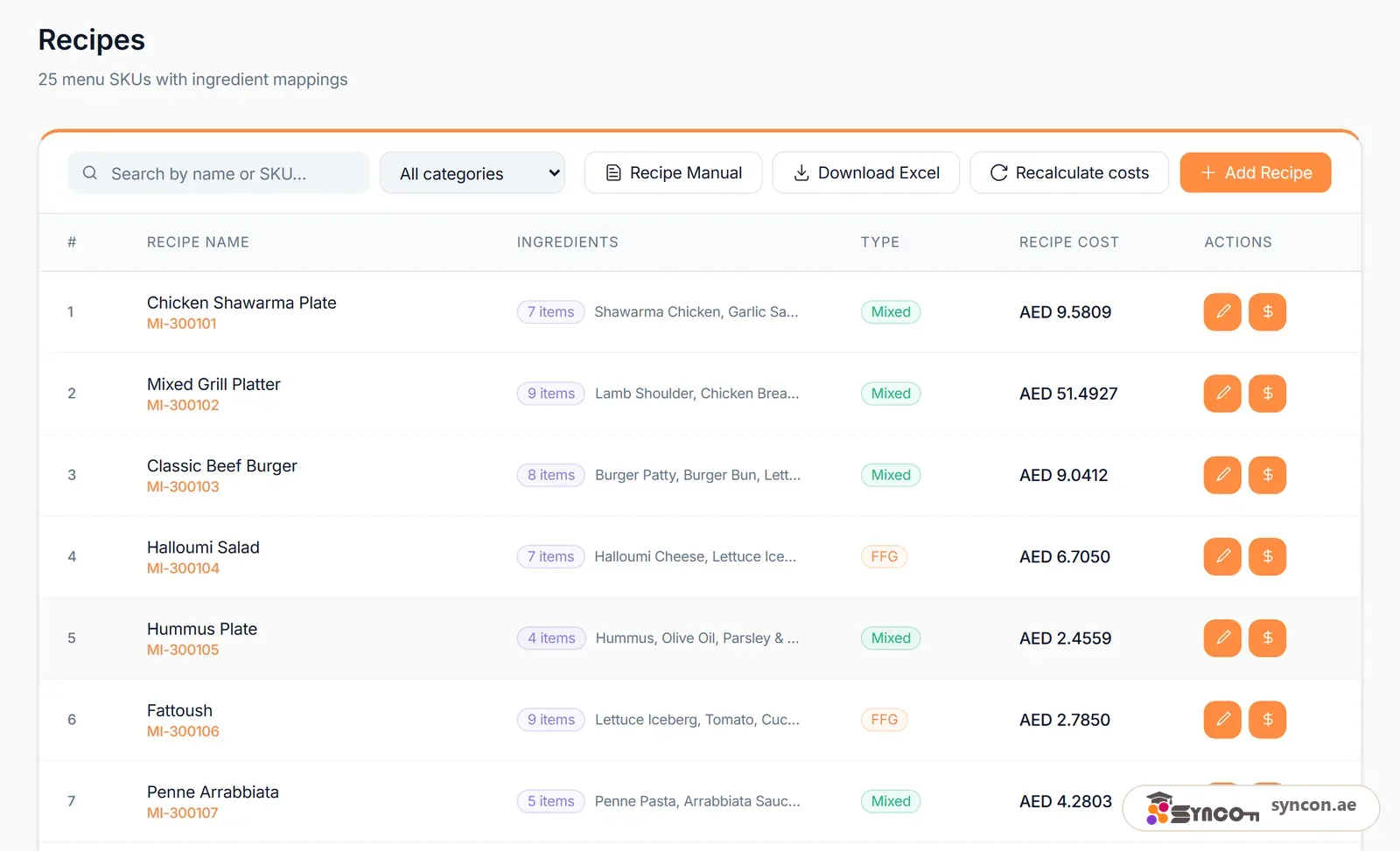
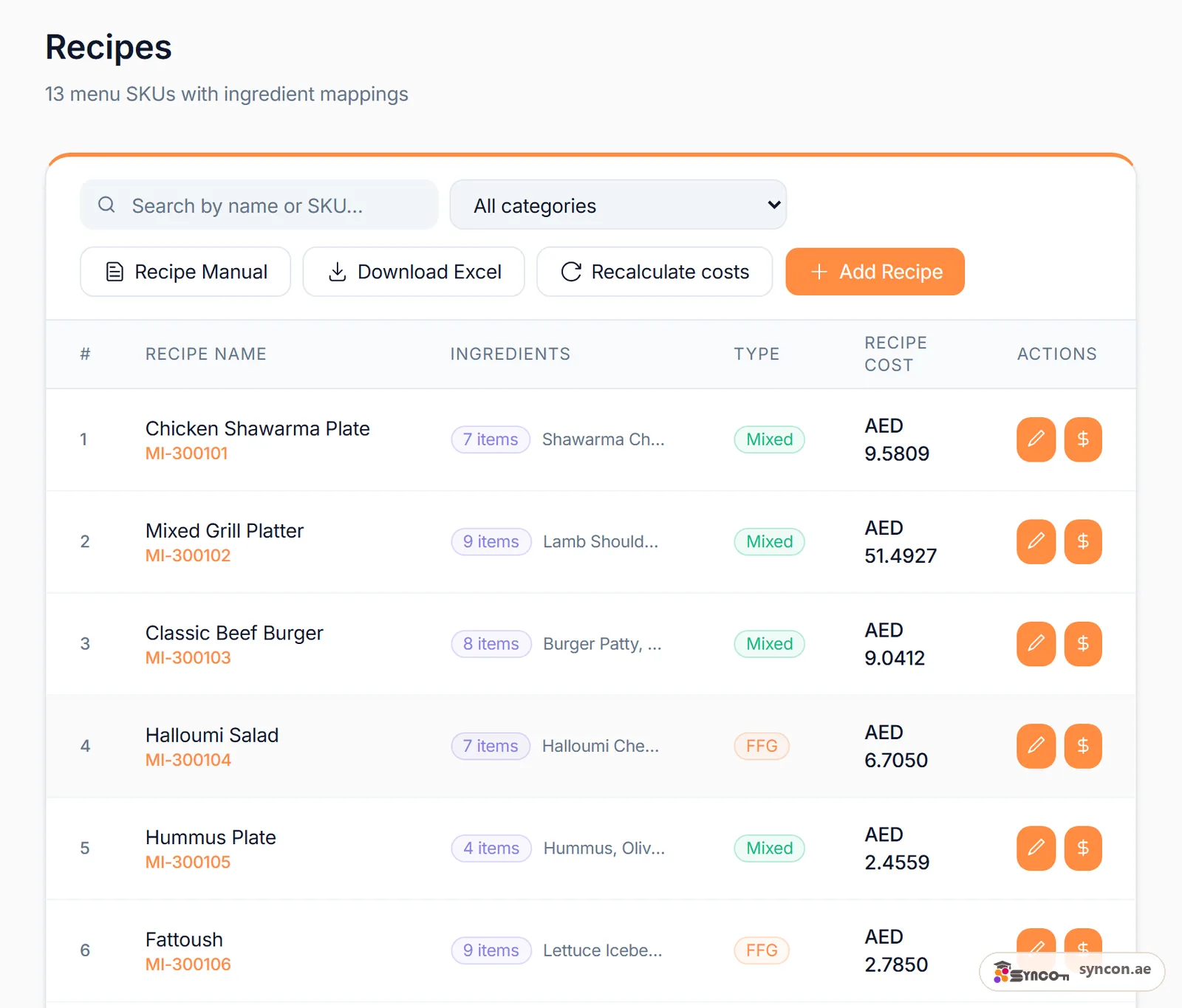
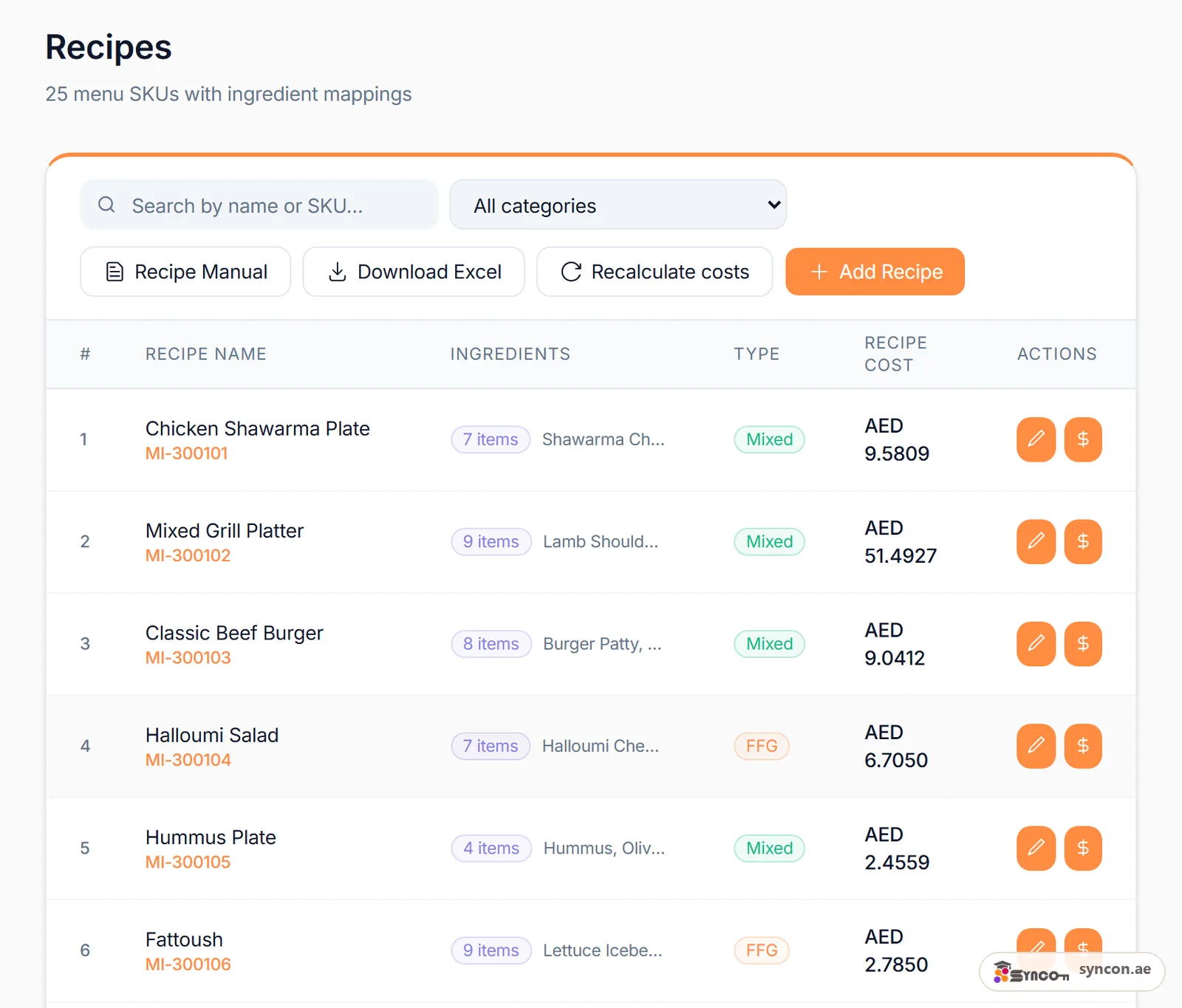
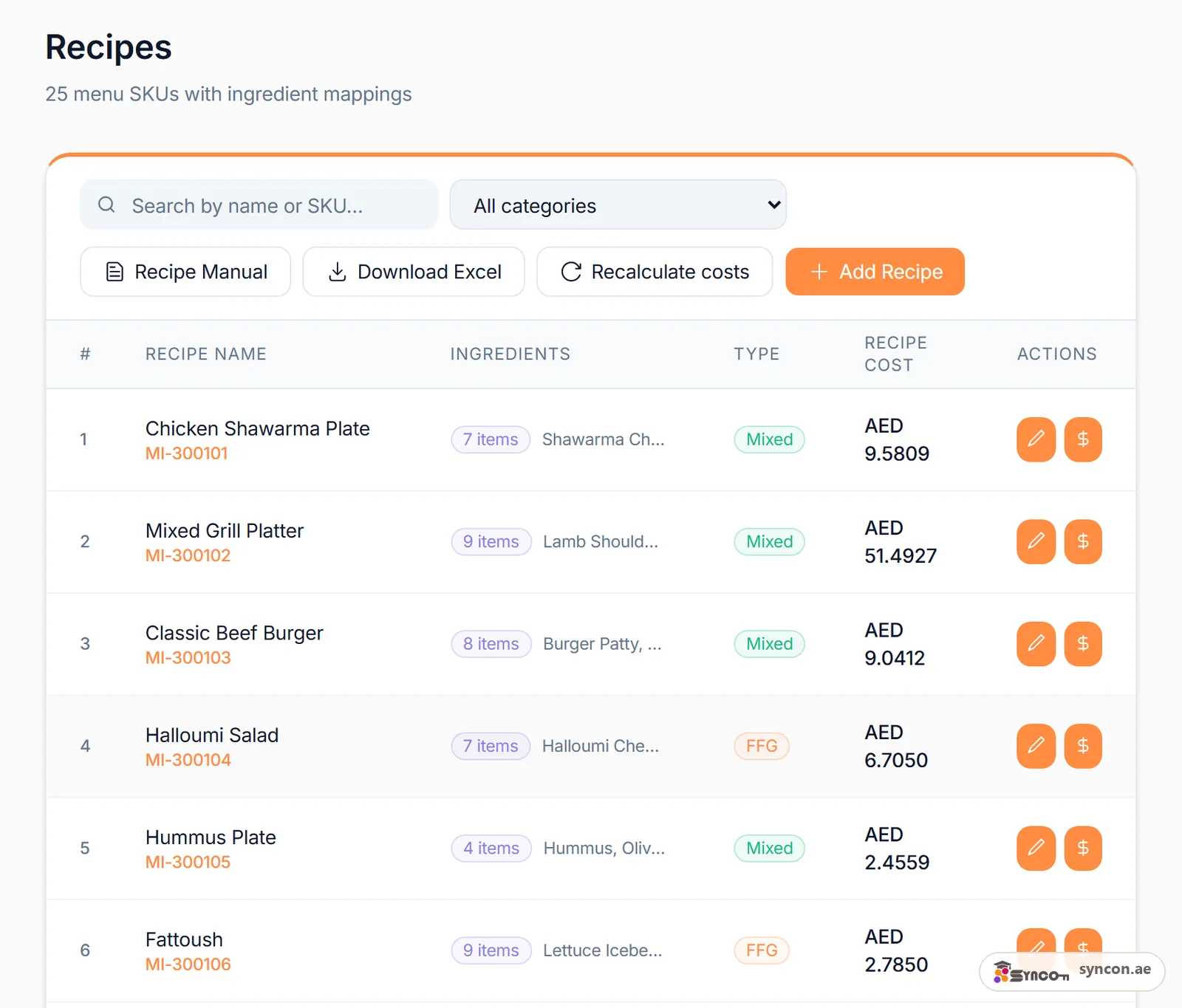
In the demo kitchen, every dish has its cost worked out from its recipe. The Chicken Shawarma Plate costs AED 9.58, the Classic Beef Burger AED 9.04 and the Mixed Grill Platter AED 51.49. Each row lists the ingredients the dish uses, so you can see at a glance which dishes contain the item that just went up. When ingredient prices change, the Recalculate costs button works the new prices through every recipe at once, so the list shows today's costs rather than last month's.
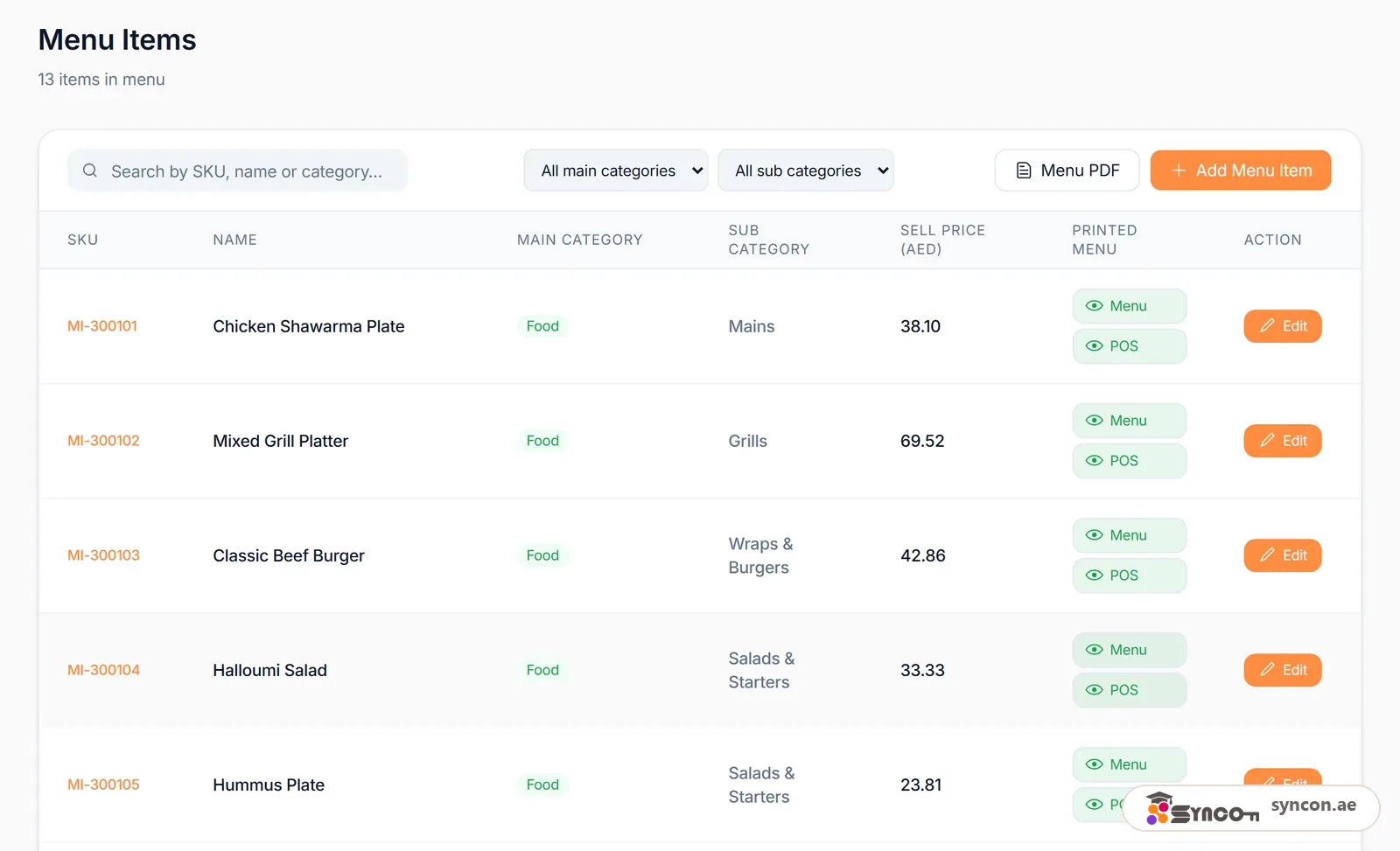
The menu items list shows what each dish sells for. Put the two screens side by side and the risk becomes clear. The Chicken Shawarma Plate sells for AED 38.10 against a cost of AED 9.58, which leaves AED 28.52 on the plate. The Mixed Grill Platter sells for AED 69.52 against AED 51.49, which leaves AED 18.03, even though it is the most expensive dish on the menu.
That makes the platter the first dish to check when meat prices move. It has the highest price and the least left over, and it carries lamb shoulder, chicken breast and other meat on the same plate, so a rise in any of them comes straight out of that AED 18.03. The shawarma plate can absorb a small change for longer.
The habit is the same as on paper: a new price comes in, the costs are recalculated, and you look first at the dishes with the least left. For a wider view of the numbers behind each plate, see how to calculate food cost for every dish.
Learn the full method in الشراء والنقد والرقابة.
The screens above are from
Restaurant operating systemsyncon.ae/portfolio/operating-system(opens in a new tab)