Restaurant packaging cost: put the box in the plate
Restaurant packaging cost belongs inside every delivery recipe. Add the box, bag, sauce cups and weighed sides so your plate cost stays true.
SyncOn team · 30 Oct 2026 · 4 min read
When the kitchen packs a Chicken Shawarma Plate for a driver, the cook reaches for a box, a lid, a sauce cup and a carrier bag, then adds a scoop of fries on the side. Restaurant packaging cost is easy to miss because the kitchen buys boxes and bags in bulk once a month and uses them one order at a time, so the bill lands in general overhead and never reaches the recipe. Leaving the box and the side off the recipe hides what that takeaway order really costs to send out.
In short
- Count every box, lid, bag and sauce cup that leaves with a takeaway dish and add them as one packaging line in its recipe.
- Weigh the fries, bread or rice that go beside the main dish and price them by the gram inside the same recipe.
- Refresh your recipe costs whenever a packaging or ingredient supplier sends a higher invoice.
Why missing the box and side distorts your plate cost
Leaving the packaging and the side dish out of a recipe makes a takeaway order look cheaper to produce than it really is. On a takeaway order, the main meat is not the only thing moving the cost. The extras around it cost money too, and if the recipe does not list them, the dish cost on your screen is lower than the money leaving the kitchen.
Small items matter because they repeat on every single bag that leaves the pass. Multiply the cost of one box, one bag and one sauce cup by every takeaway order in a day, and small change on one order becomes a real bill over a month. When you build each dish's cost from its full ingredient list as shown in recipe costing for every plate, nothing leaves the pass uncounted.
What good practice looks like
A dish packed for takeaway is a different product from the same dish served on a china plate, so it needs its own recipe cost built from every item that goes into the bag.
- Walk through one real order and list every piece. Put the box, lid, bag, sauce cups, napkins and cutlery on the counter for one dish. Add up what those pieces cost for a single order to get your packaging line.
- Put that packaging line straight into the recipe. Packaging belongs to the dish that uses it, the same way the bread does. A dish sold both in the dining room and for takeaway then has two recipes and two costs.
- Weigh and cost the side by the gram. Fries, rice or bread beside the main are ingredients like any other, so weigh the portion once and let the recipe carry the figure. A side judged by eye is a quiet leak on the menu, and the oil it cooks in belongs there too, as explained in putting fryer oil cost in the recipe.
- Update the item price the day a supplier invoice changes. Paper and plastic suppliers raise prices just like meat and vegetable suppliers do, and updating the item once should flow straight into every dish that uses it.
- Compare the full takeaway recipe cost against the selling price on that channel, and check what each delivery order keeps before you agree to a promotion.
How this looks in SyncOn
The Recipes screen shows the cost of every dish worked out from its mapped ingredients.
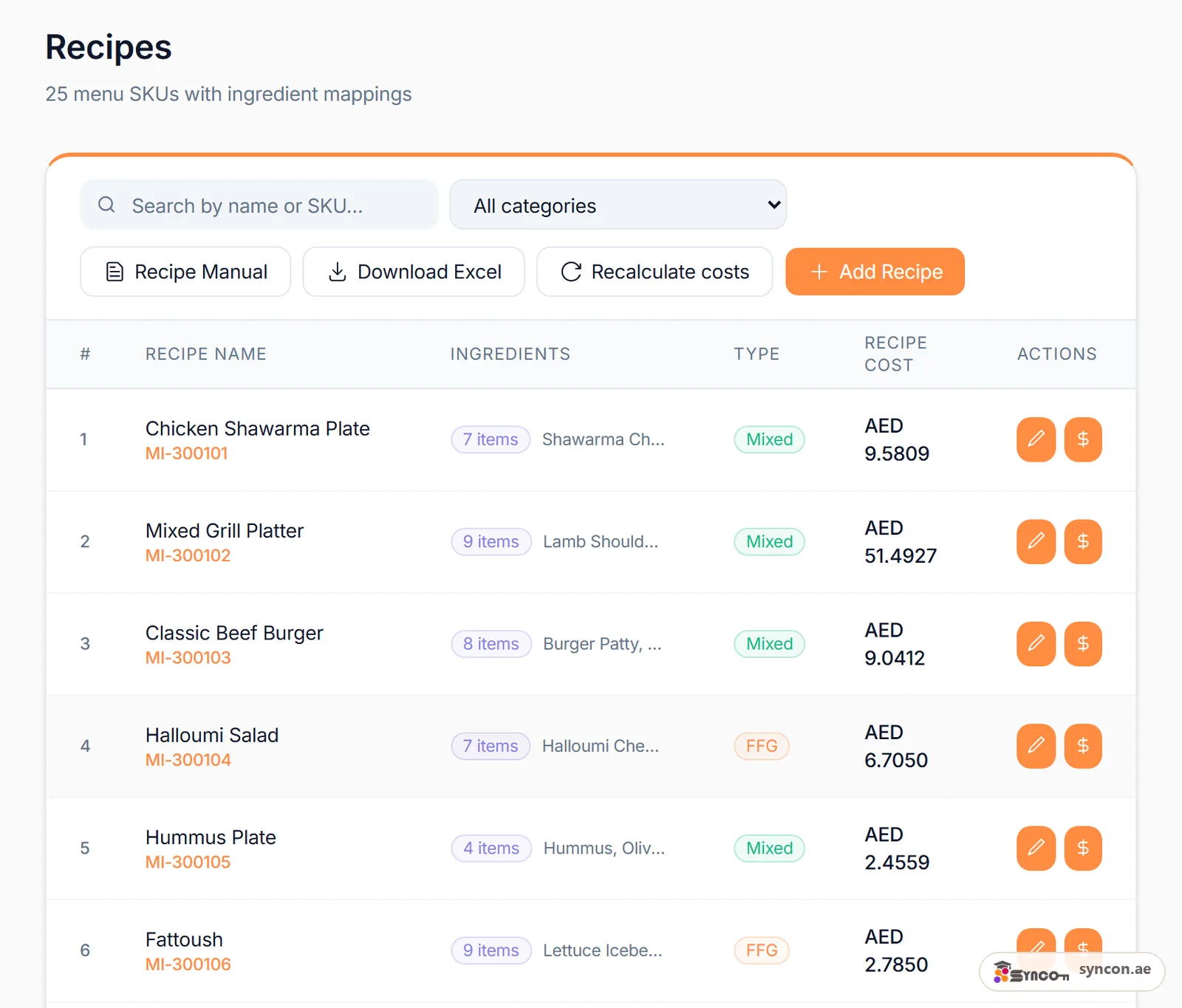
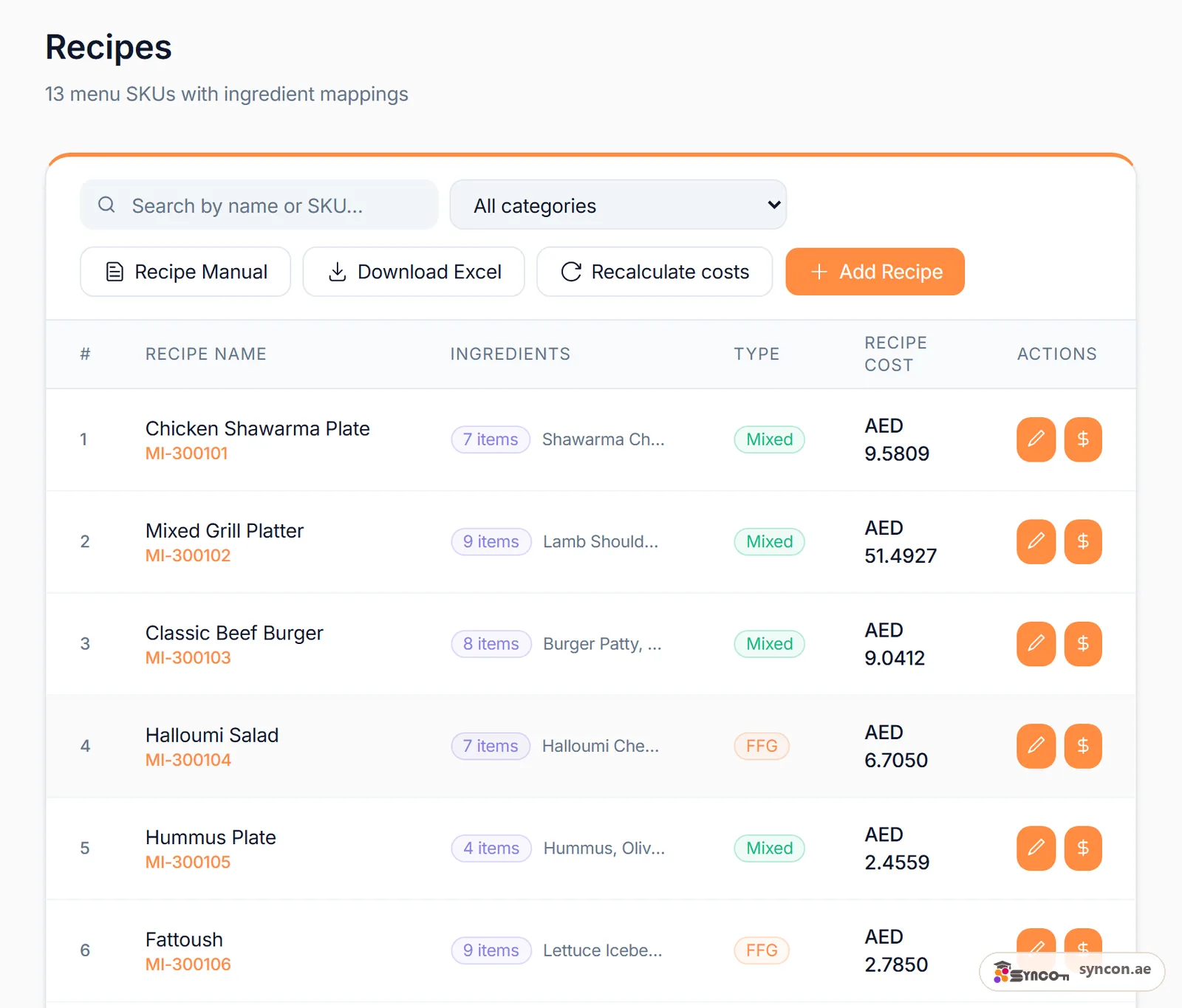
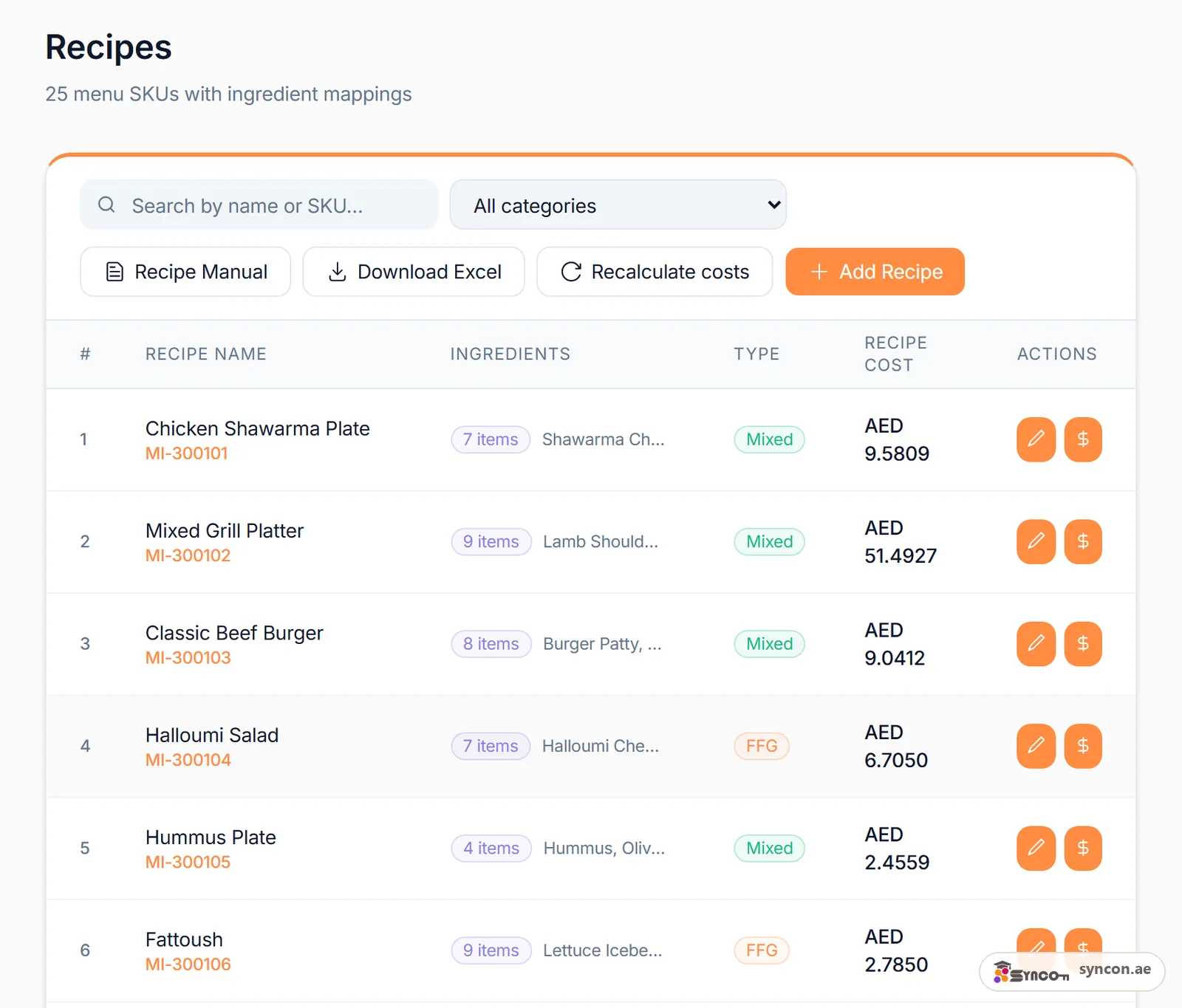
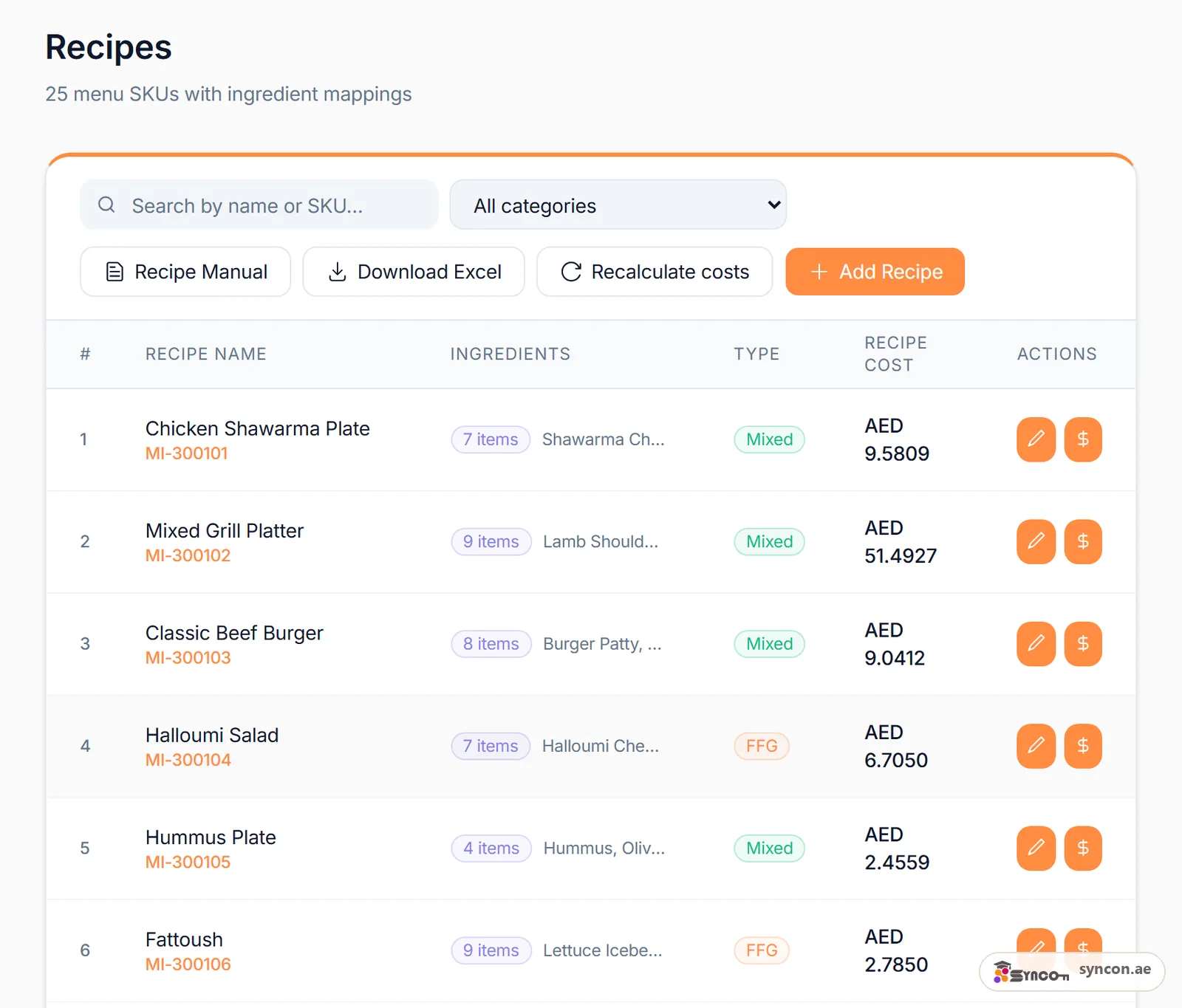
In the demo kitchen, the Recipes screen lists 25 menu SKUs with ingredient mappings, where each dish's Recipe Cost is the total cost of the exact quantities linked to that plate. The Chicken Shawarma Plate lists 7 items—Shawarma Chicken, Garlic Sauce, Potato, Sunflower Oil, Arabic Bread, Lettuce Iceberg and Tomato—with a recipe cost of AED 9.58. The Classic Beef Burger lists 8 items, including Potato and Sunflower Oil alongside the patty, bun and cheese, at a recipe cost of AED 9.04.
Because the side potato, frying oil and bread are mapped inside the recipe, any rise in their supplier price moves the plate cost as soon as you press Recalculate costs at the top of the screen. A takeaway box, bag and sauce cup work the same way: add them as items inside the dish's recipe with the quantity used per order, and the recipe cost will include the packaging alongside the food.
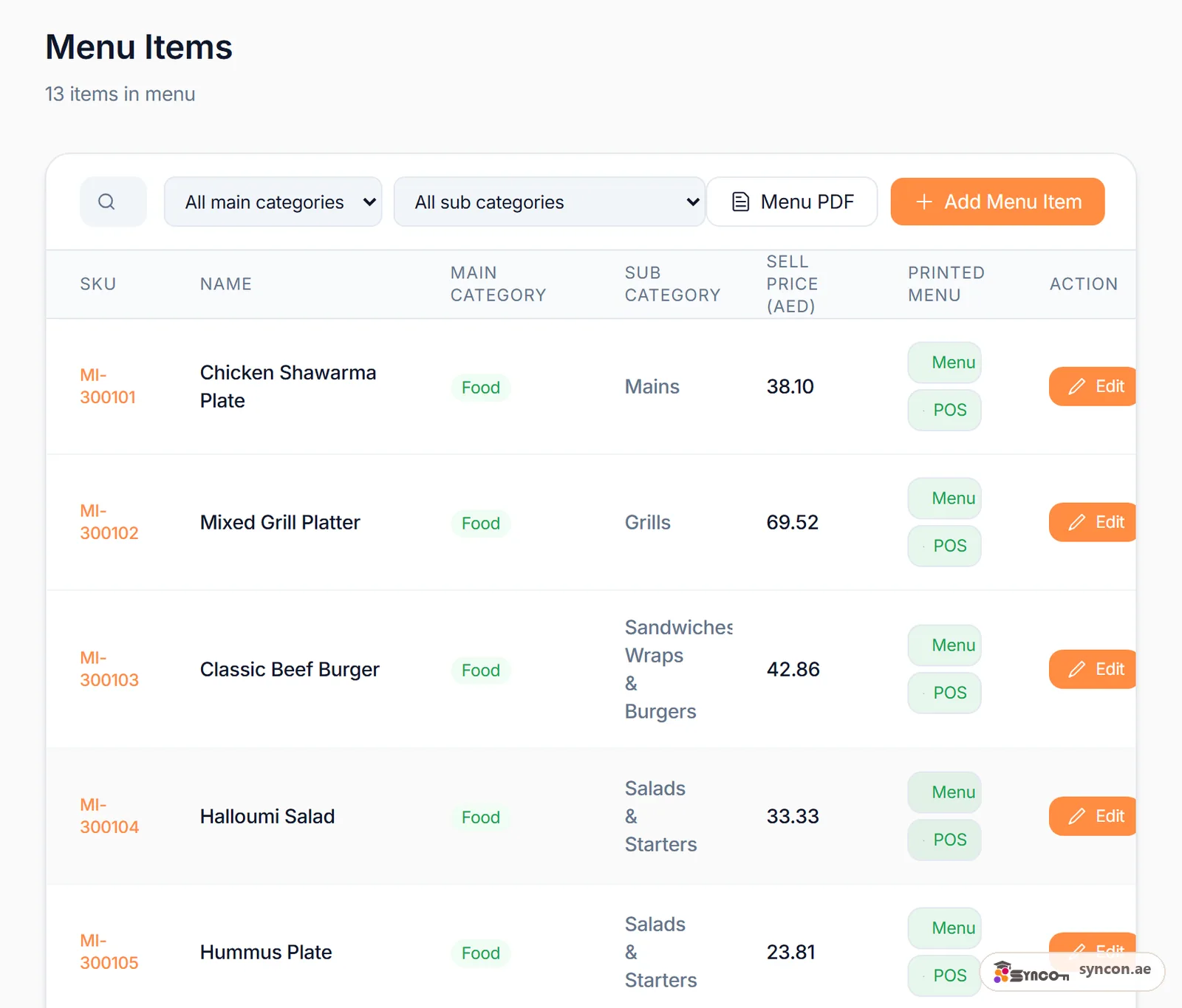
The Menu Items screen shows the selling price of each dish in AED alongside its main category and sub category. Put the Sell Price next to the Recipe Cost from the first screen to see the gross margin, which is the money left from the selling price after subtracting the recipe cost. For the Chicken Shawarma Plate, a selling price of AED 38.10 against a recipe cost of AED 9.58 leaves AED 28.52 before any packaging line is added.
For the Classic Beef Burger, a selling price of AED 42.86 against a recipe cost of AED 9.04 leaves AED 33.82 on the plate. Every item you add to a takeaway recipe comes straight off those remaining dirhams, so check both screens side by side whenever you price a takeaway dish.
Learn the full method in الوصفات والتكلفة والتشغيل اليومي.
The screens above are from
Restaurant operating systemsyncon.ae/portfolio/operating-system(opens in a new tab)