Fryer oil cost: the hidden line in plate cost
Track fryer oil cost inside every fried dish recipe so your plate cost stays accurate and updates the day your supplier changes the price of cooking oil.
SyncOn team · 30 Oct 2026 · 4 min read
The fry cook lifts a basket of golden potatoes for a Chicken Shawarma Plate, tops up the hot vat from a plastic drum, and sends the order out while nobody writes down the oil used. Leaving fryer oil cost out of the recipe makes every fried plate look cheaper on paper than it is in the kitchen, because the drum is paid for on the supplier invoice even when the recipe card ignores it.
In short
- Measure the oil your fryers use in a week and divide it across the fried plates sold.
- Add sunflower oil as a weighed ingredient line inside the recipe of every fried dish.
- Recalculate your recipe costs whenever a new oil invoice arrives and check what each plate keeps.
Why shared fryer oil slips out of plate cost
Shared fryer oil slips out of plate cost because cooks pour it into a vat for the whole shift rather than portioning it onto one plate at a time. A chicken breast or a burger bun goes onto a single order, so it is easy to weigh and write on a recipe card. Sunflower oil sits in the fryer and cooks basket after basket of potatoes across the day, so managers treat it as a general supply instead of an ingredient.
Cooking oil invoices can move quietly between deliveries while menu prices stay still. If you are setting up your dish cards for the first time, our guide on how to calculate food cost for every dish explains how each ingredient line builds the total cost of a plate.
Leaving the oil off the recipe card creates three blind spots for the manager. First, the recipe cost is understated, so the money you think the dish keeps after ingredient cost is overstated. Second, when a supplier raises the drum price, the recipe cost on your screen does not move. Third, you cannot see which dishes depend on the fryer before deciding which menu price or portion to adjust.
How to put fryer oil into every fried recipe
You put fryer oil into a recipe by turning one week of vat top-ups and oil changes into an average amount per fried portion. You only need your supplier invoices, a notepad, and your weekly count of plates sold.
Log a full week of oil put into the fryer. Write down every top-up and full vat change from Monday to Sunday in the unit you buy it in. Use the real drums opened in the kitchen rather than a guess.
Divide that weekly oil total by the number of fried portions cooked in the same week. If a main dish carries a full portion of fried potatoes and a starter carries half, give the main dish twice the oil share of the starter.
Enter the oil as a recipe line item. Add the oil with its portion weight right alongside the meat, bread, and vegetables on every fried dish. Leaving it as a text note at the bottom of the page means the math will still ignore it.
Update the ingredient price on the day a new invoice arrives. Our walkthrough on recipe costing for every plate shows how linking ingredient prices to recipes keeps your dish costs live, and you can then follow how to re-cost dishes when supplier prices rise to check the affected items right away.
A quick what if calculation shows how fast a missing line adds up. Take the Chicken Shawarma Plate with a recipe cost of AED 9.58: across 100 plates sold, the kitchen uses AED 958 in recorded recipe ingredients, and any unrecorded fryer oil sits on top of that bill without showing in your numbers.
How this looks in SyncOn
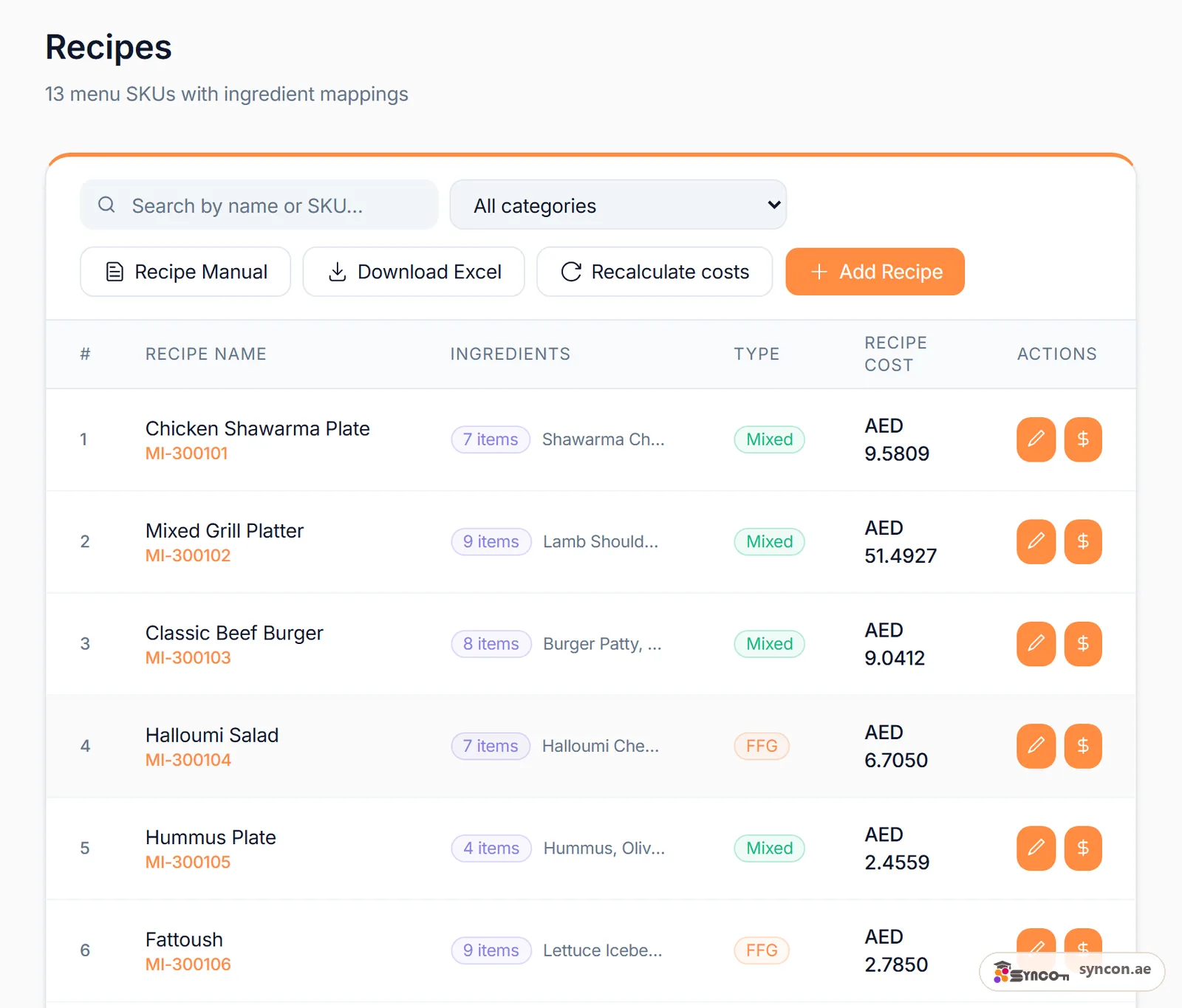
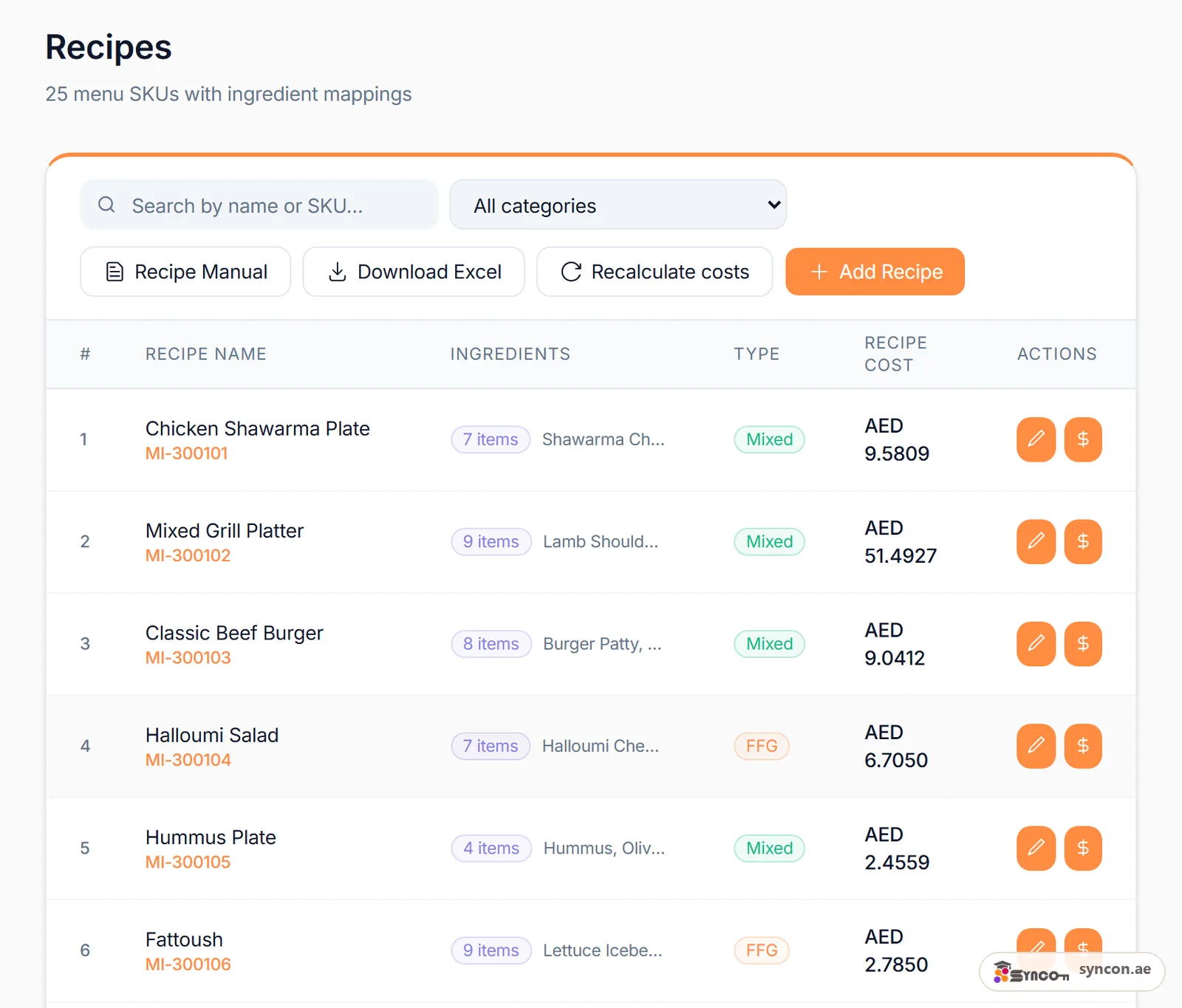
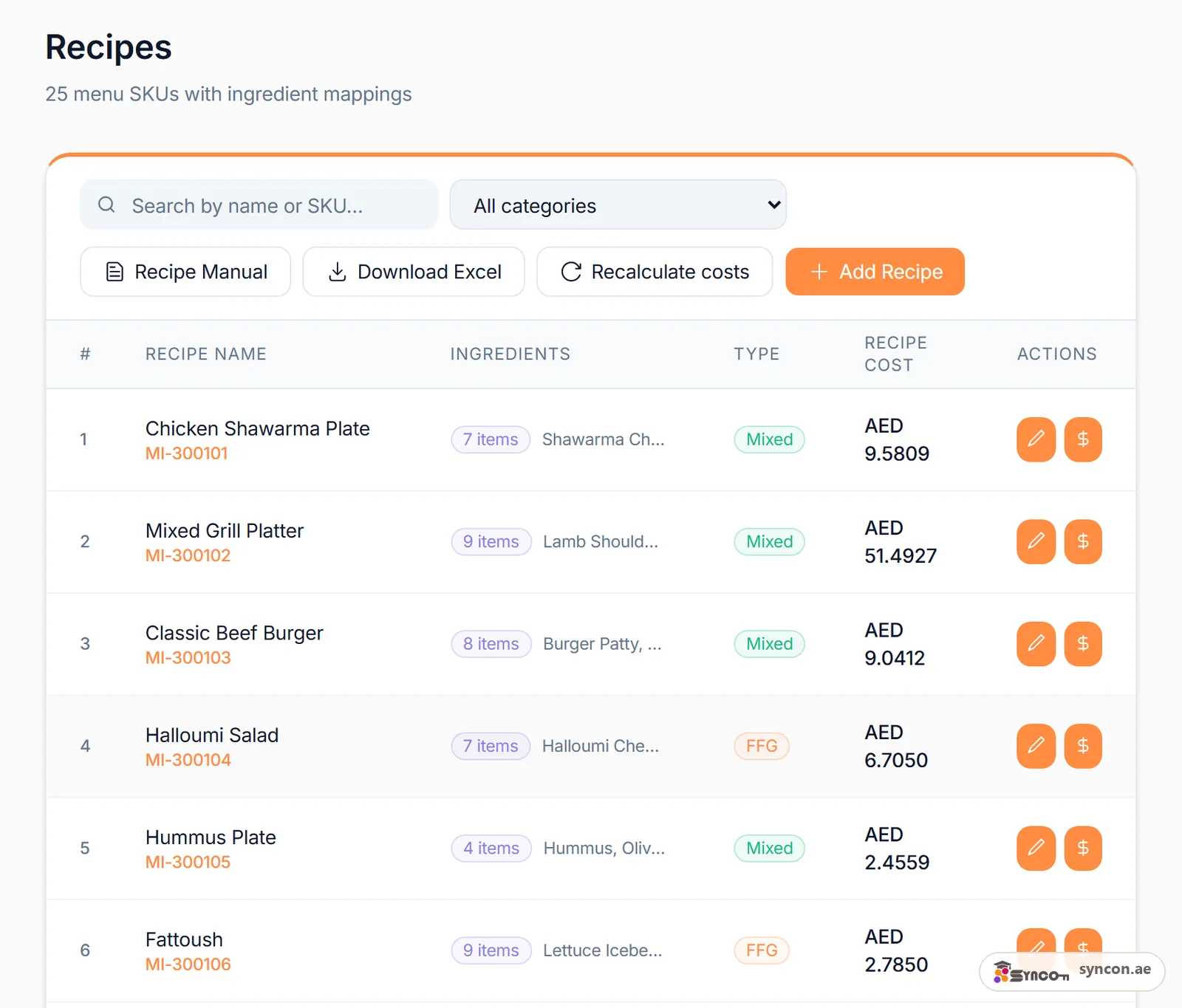
The Recipes screen shows the cost of every dish worked out from its mapped ingredients, alongside the item count and recipe type.
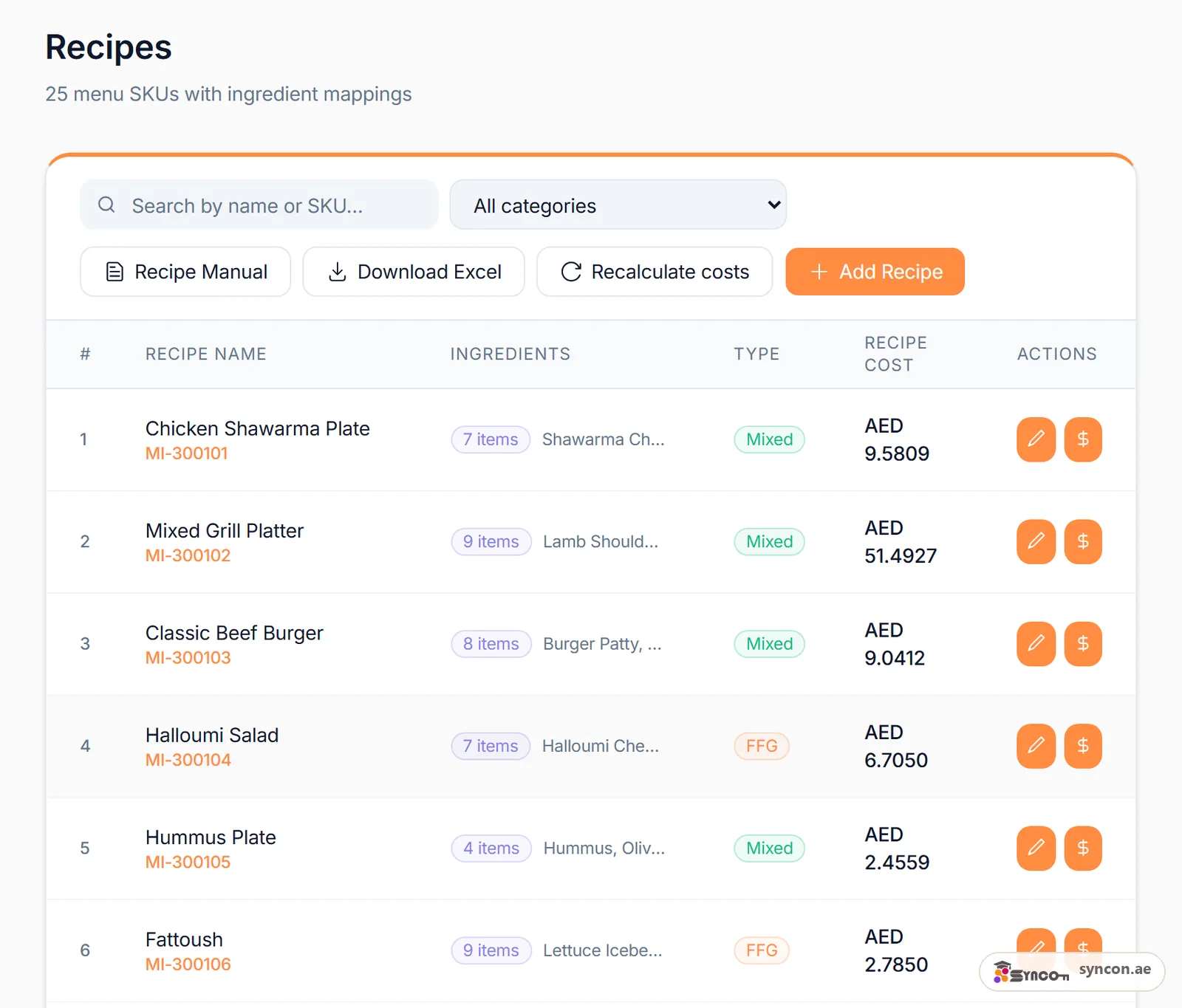
In the demo kitchen list of 25 menu SKUs, Recipe Cost is the total cost of one portion built from the current prices of its ingredients, and Type shows whether the recipe is Mixed or FFG. The Chicken Shawarma Plate (MI-300101) has 7 items—Shawarma Chicken, Garlic Sauce, Potato, Sunflower Oil, Arabic Bread, Lettuce Iceberg, and Tomato—for a recipe cost of AED 9.58, while the Classic Beef Burger (MI-300103) has 8 items including Potato and Sunflower Oil for a recipe cost of AED 9.04. Because Sunflower Oil is mapped inside both recipes, the manager can click Recalculate costs at the top of the list whenever a new oil invoice is entered to refresh every dish that uses the fryer.
The Menu Items screen shows the selling price of each dish alongside its SKU, main category, and sub category.
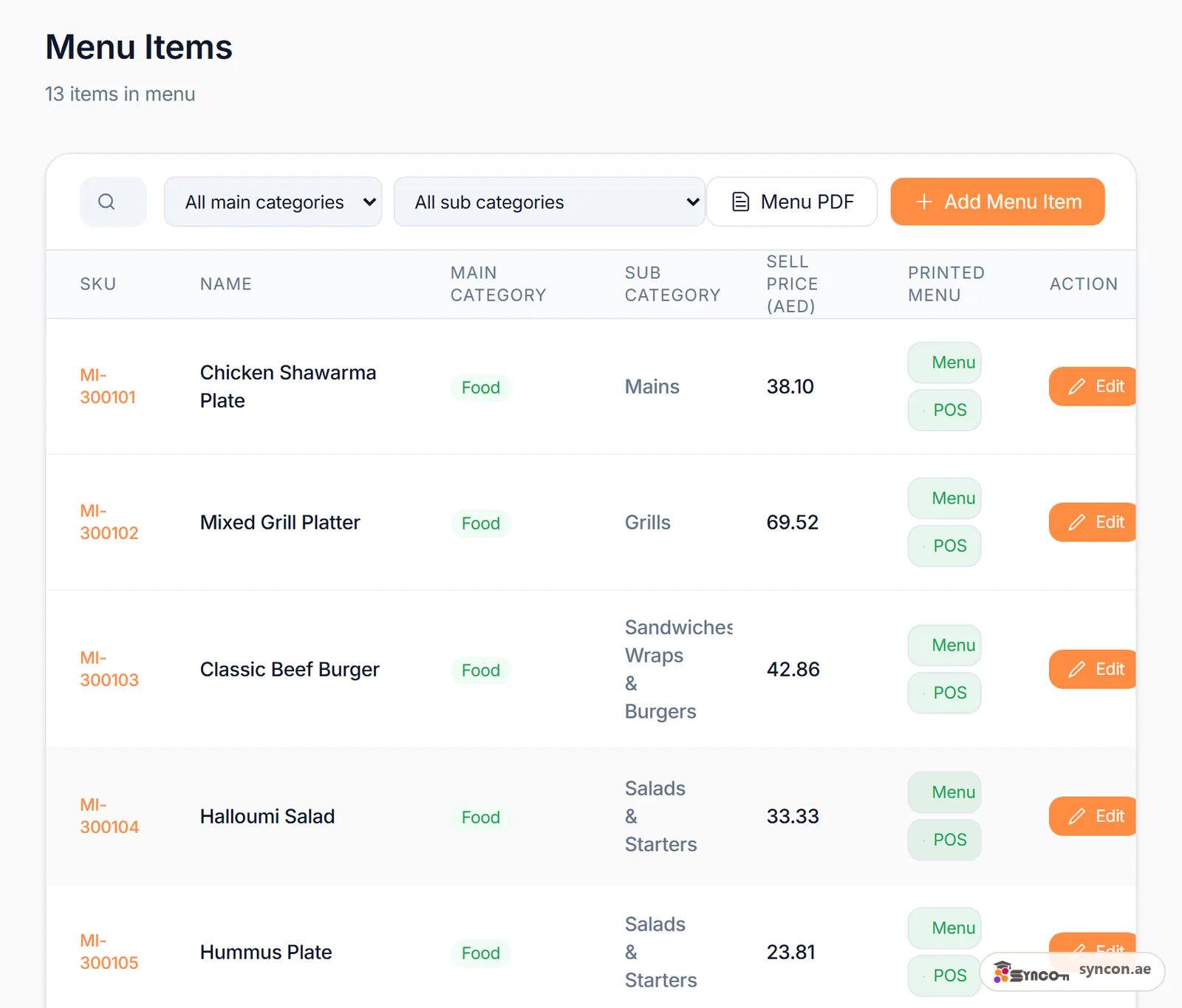
Here Sell Price (AED) is the price on the menu and POS before comparing it against the recipe cost. The Chicken Shawarma Plate sells for AED 38.10 against its AED 9.58 recipe cost, leaving AED 28.52 per plate, while the Classic Beef Burger sells for AED 42.86 against its AED 9.04 recipe cost, leaving AED 33.82 per plate. Comparing the AED 9.58 shawarma cost against the AED 9.04 burger cost shows a difference of AED 0.54 per plate, and the manager can click Edit on either row if an oil price jump requires a menu price update.
Learn the full method in الوصفات والتكلفة والتشغيل اليومي.
The screens above are from
Restaurant operating systemsyncon.ae/portfolio/operating-system(opens in a new tab)