Standardized recipes: why every dish needs one
A standardized recipe keeps every plate the same on every shift. Write it down, weigh each ingredient once, and the dish's cost stays in view.
SyncOn team · 21 Oct 2026 · 4 min read
Ask three cooks to plate the same chicken shawarma and you will often get three different plates. One adds a little more chicken because the guest looked hungry. One adds an extra spoon of garlic sauce because it is the house favourite. One fills the box with more fries because the fryer was full. Nobody is wrong, and nobody is careless. The dish was simply never written down, so every cook carries a slightly different version of it in their head. A standardized recipe, written once and followed by everyone, is the fix.
Why it matters
When a recipe lives only in the head chef's memory, the plate changes every time the shift changes. A guest who loved the dish on Monday gets something different on Thursday and wonders what happened. A new cook needs days of watching before they can make it alone, and even then they learn the version of whoever trained them.
The food cost moves too, without anyone deciding it should. A few extra grams of chicken on every plate look like nothing on the pass, but they are paid for on every order, every day. Those grams never appear on the sales report, so the first sign is usually a month where the numbers simply do not add up, and nobody can say why.
A standardized recipe, often kept as a recipe card, lists every ingredient, its exact quantity and how the finished plate looks. It fixes all three problems at once. It turns the dish from an idea into a standard: the same ingredients, the same quantities, the same plate, whoever is cooking.
What good practice looks like
- Weigh every ingredient once, on a normal busy day, not on a quiet afternoon when everyone has time to be careful. The card should describe the dish as it is really made.
- Write each quantity in grams, millilitres or pieces. Avoid words like a handful, a spoon or a portion, because every cook reads them differently. Once the quantities are set, portion control keeps every plate to them.
- Write the prepared items, like a marinated chicken or a house sauce, as recipes of their own. Then the dish card only has to say how much of each one goes on the plate.
- Add a photo of the finished plate, so everyone knows what right looks like before the plate goes out.
- Keep the card where the cooks work, not in an office drawer. A card nobody can see is a card nobody follows.
- Change the card on the day the recipe changes, and tell the team why. An old card is worse than no card, because people trust it.
Start with the dishes you sell the most. Five written cards for your best sellers will change more than fifty cards for dishes that sell twice a week. Ask the cook who makes each dish best to make it while someone weighs and writes. That way the card captures the real dish, and the person who knows it best owns the standard. Once the cards exist, you can calculate the food cost of each dish, and the sauces and marinades they use deserve a recipe yield of their own.
How this looks in SyncOn
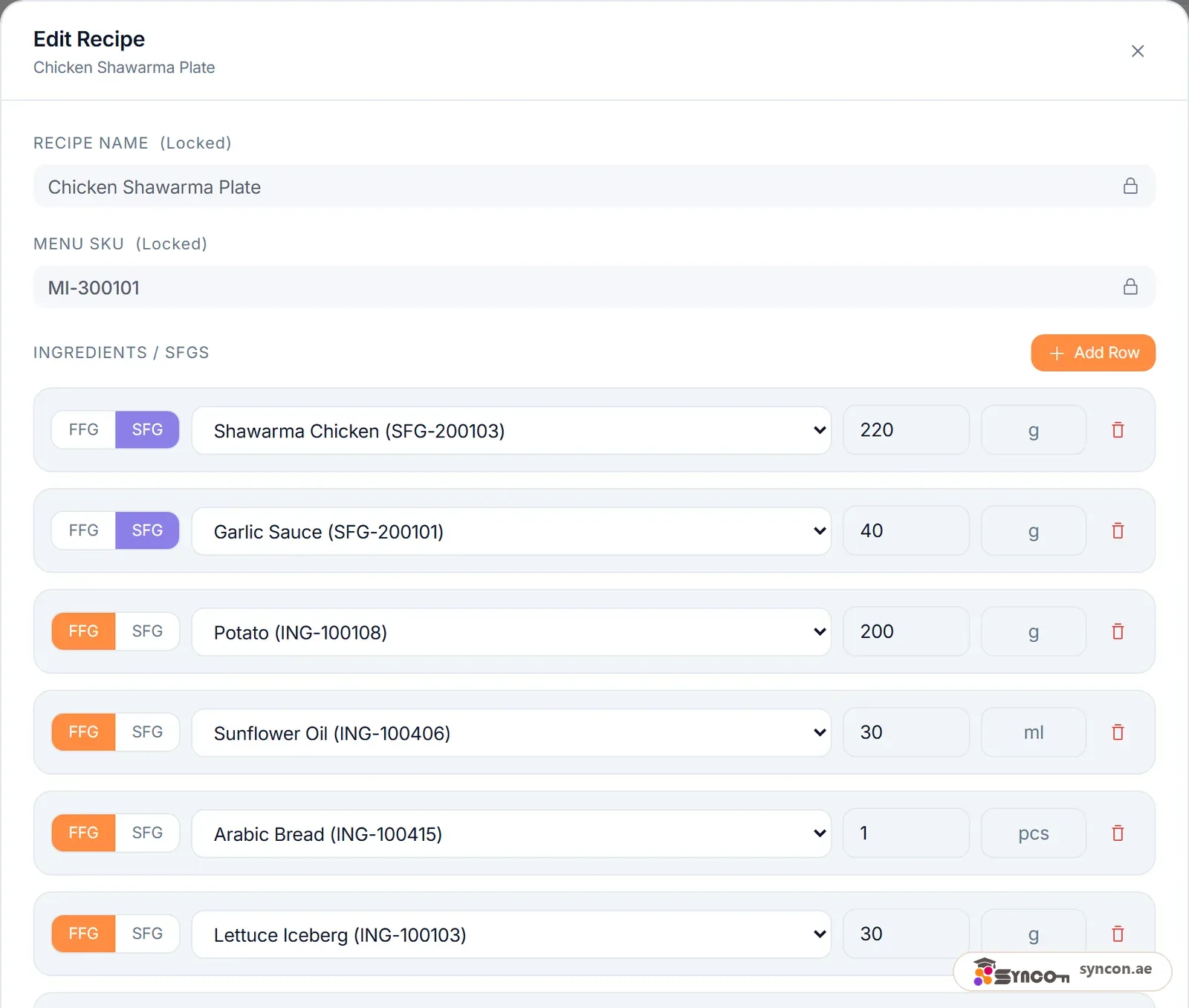
Each dish has its own recipe with every ingredient and its quantity. In the demo kitchen the chicken shawarma plate uses 220 g of shawarma chicken, 40 g of garlic sauce, 200 g of potato, 30 ml of sunflower oil, one piece of Arabic bread and 30 g of lettuce. The shawarma chicken and the garlic sauce are marked as prepared items: each is a recipe of its own, so the plate only says how much of it to use, exactly as the good practice above suggests.
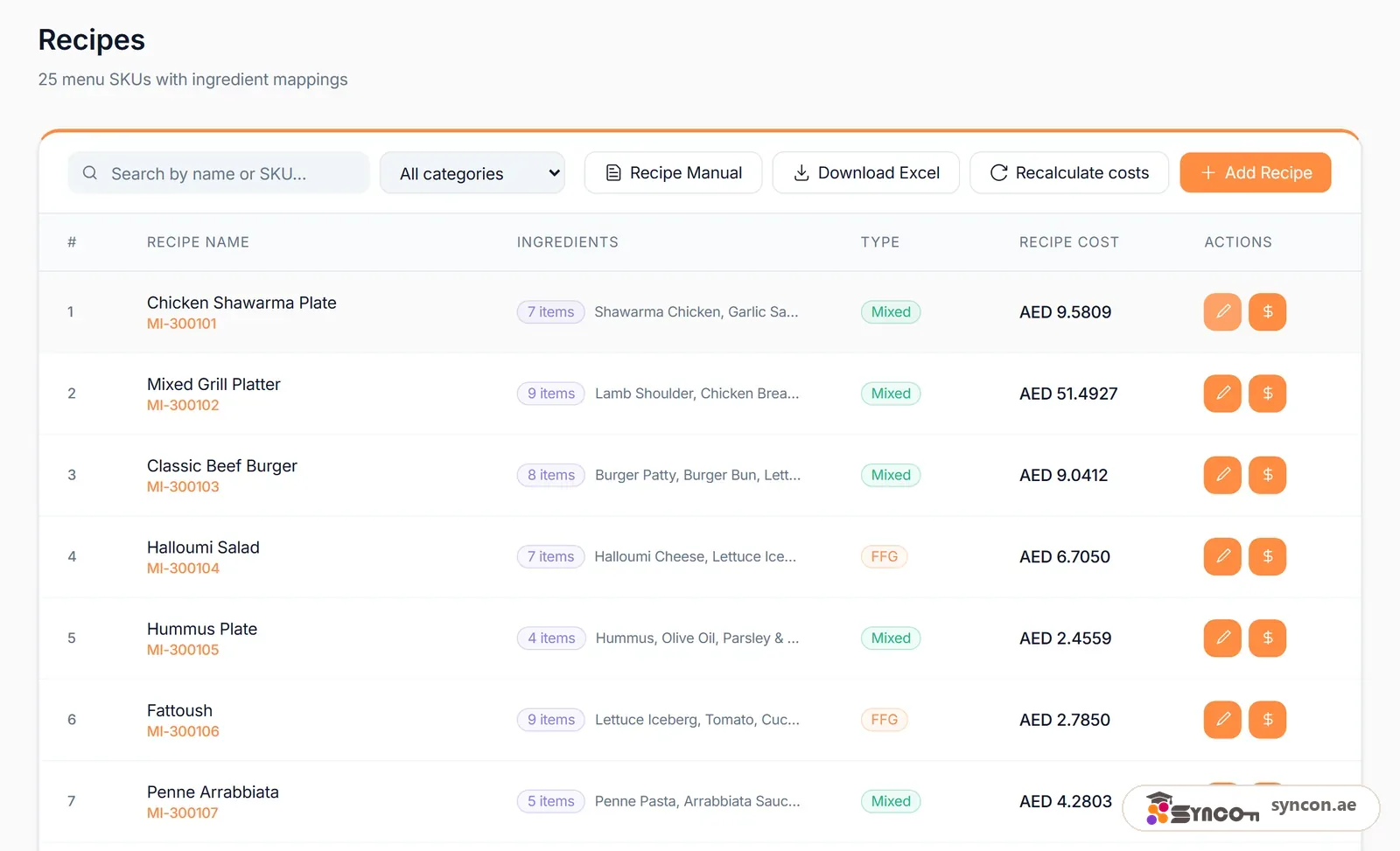
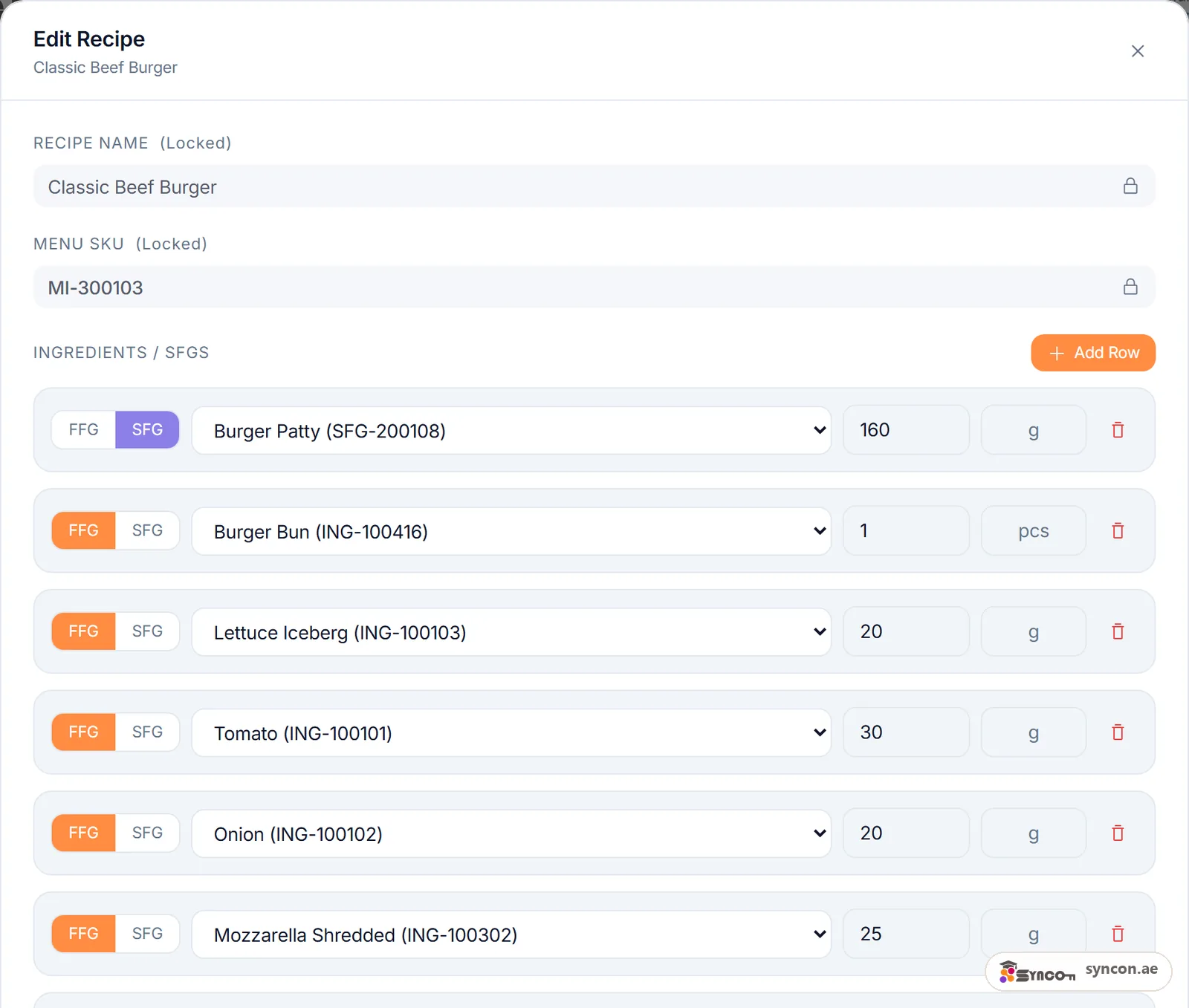
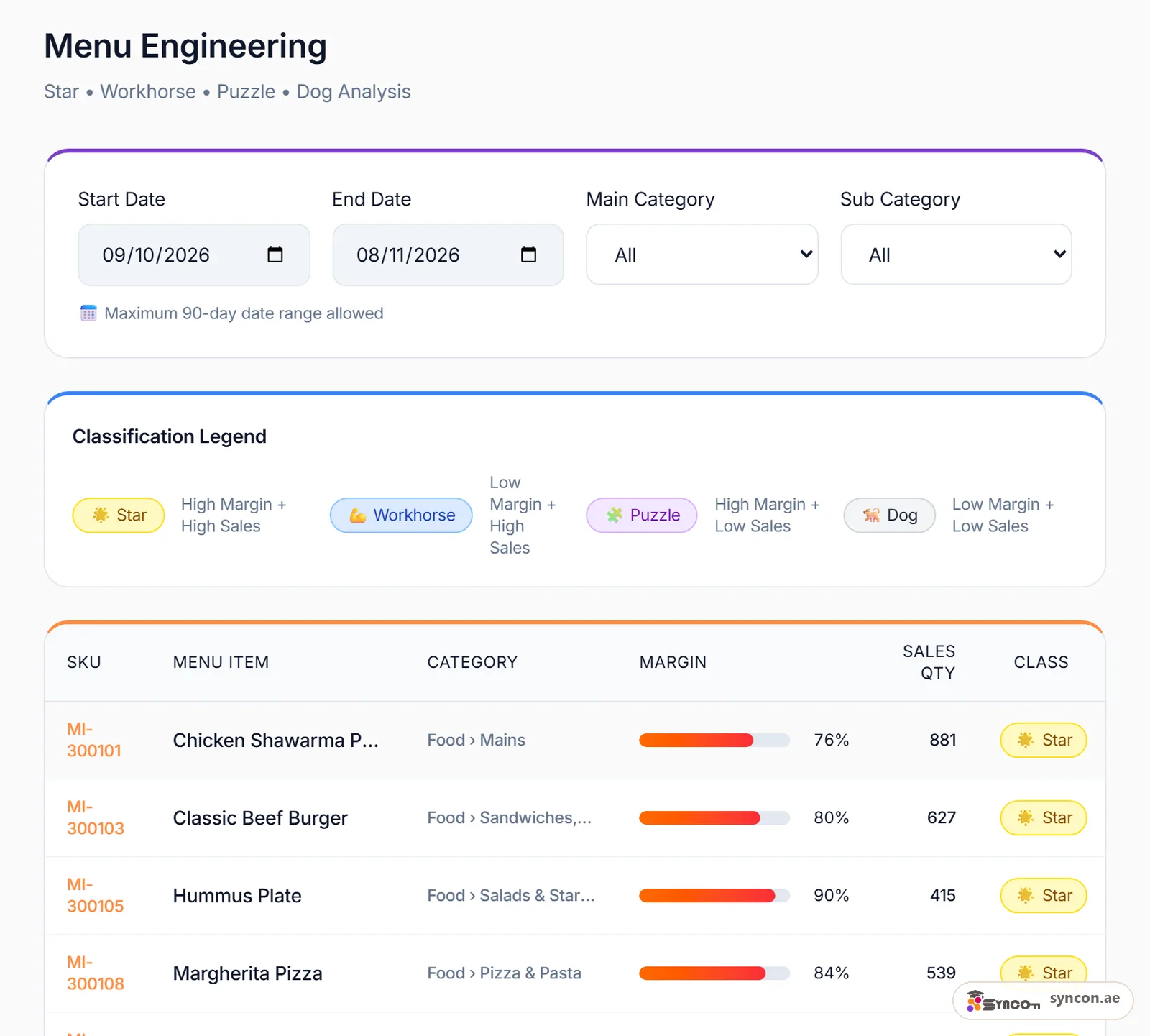
Because every ingredient is written down with its quantity, the recipe list shows the cost of each dish next to its name. In the demo kitchen the chicken shawarma plate costs AED 9.58 to make, the classic beef burger AED 9.04 and the hummus plate AED 2.46. The list also shows how many ingredients each dish has, and a Recalculate costs button brings every dish up to date after ingredient prices change, so the card and its cost don't drift apart.
Learn the full method in الوصفات والتكلفة والتشغيل اليومي.
The screens above are from
Restaurant operating systemsyncon.ae/portfolio/operating-system(opens in a new tab)