Recipe yield: cost your sauces and prep by the gram
Recipe yield is what a batch really makes. Weigh it for every sauce, dough and marinade and each plate carries its true cost per gram.
SyncOn team · 21 Oct 2026 · 3 min read
The garlic sauce runs out at seven on a Friday. The prep cook makes a new batch in a hurry, a little more oil this time, a little less lemon, and nobody weighs anything. The sauce tastes slightly different, the tub lasts a different number of plates, and the cost of every shawarma that night changes without anyone noticing. Multiply that by every sauce, dough and marinade in the kitchen, and a large part of the menu is running on guesses. The missing number is the recipe yield: how much each batch really makes.
Why it matters
Prep items sit between the raw ingredients and the plate. Garlic and oil become garlic sauce; flour and yeast become pizza dough; chicken and spices become shawarma chicken. They are made in big batches but served by the spoon or by the gram, which makes them easy to forget when you cost a dish.
If the dish recipe lists its garlic sauce by weight but nobody knows what a gram of that sauce costs, the dish cost is incomplete. And if the batch itself changes every time it is made, the taste and the yield change with it. Two cooks making the same marinade differently will get a different number of portions out of the same tray of chicken.
Writing each prep item as a recipe of its own fixes both problems. The batch is made the same way every time, and its cost per gram becomes a known number that every dish using it can carry.
What good practice looks like
- Write the batch as a recipe. Every ingredient, weighed, in grams, millilitres or pieces, just like a dish.
- Weigh what the batch really makes: its recipe yield. Cooking, straining and trimming change the weight. Weigh the finished batch, not the raw ingredients, and use that as its yield. A tray of marinated chicken weighs less once it is cooked and sliced, and the plate only ever receives the cooked weight.
- Work out the cost per gram. Divide the cost of everything that went into the batch by the yield. That small number is what every plate pays for each gram it uses.
- Use the prep item inside the dish recipes. The dish then says how much sauce or dough it uses, and its cost follows the batch automatically. That is what makes a standardized recipe complete, and it is the only honest way to calculate food cost for dishes built on prep.
- Match the batch size to what you use. A batch that is too big ends up in the bin; a batch that is too small is remade in a rush. Both cost money. A daily kitchen prep list turns this into a plan.
- Label and date every container. The recipe keeps the batch consistent; the label keeps the oldest batch moving first.
- Re-weigh the yield now and then. If the yield drops, something changed: the supplier, the method or the cook.
How this looks in SyncOn
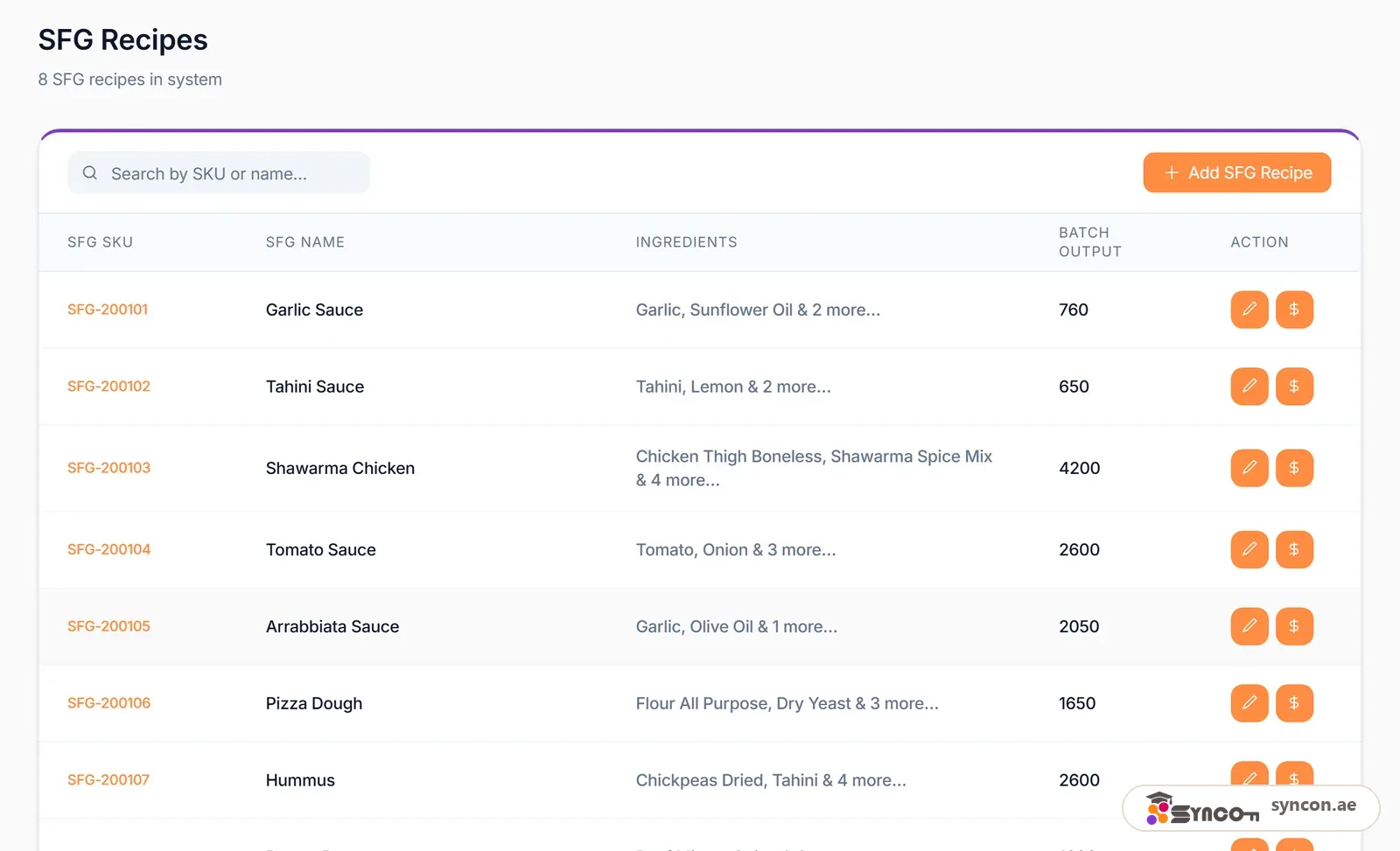
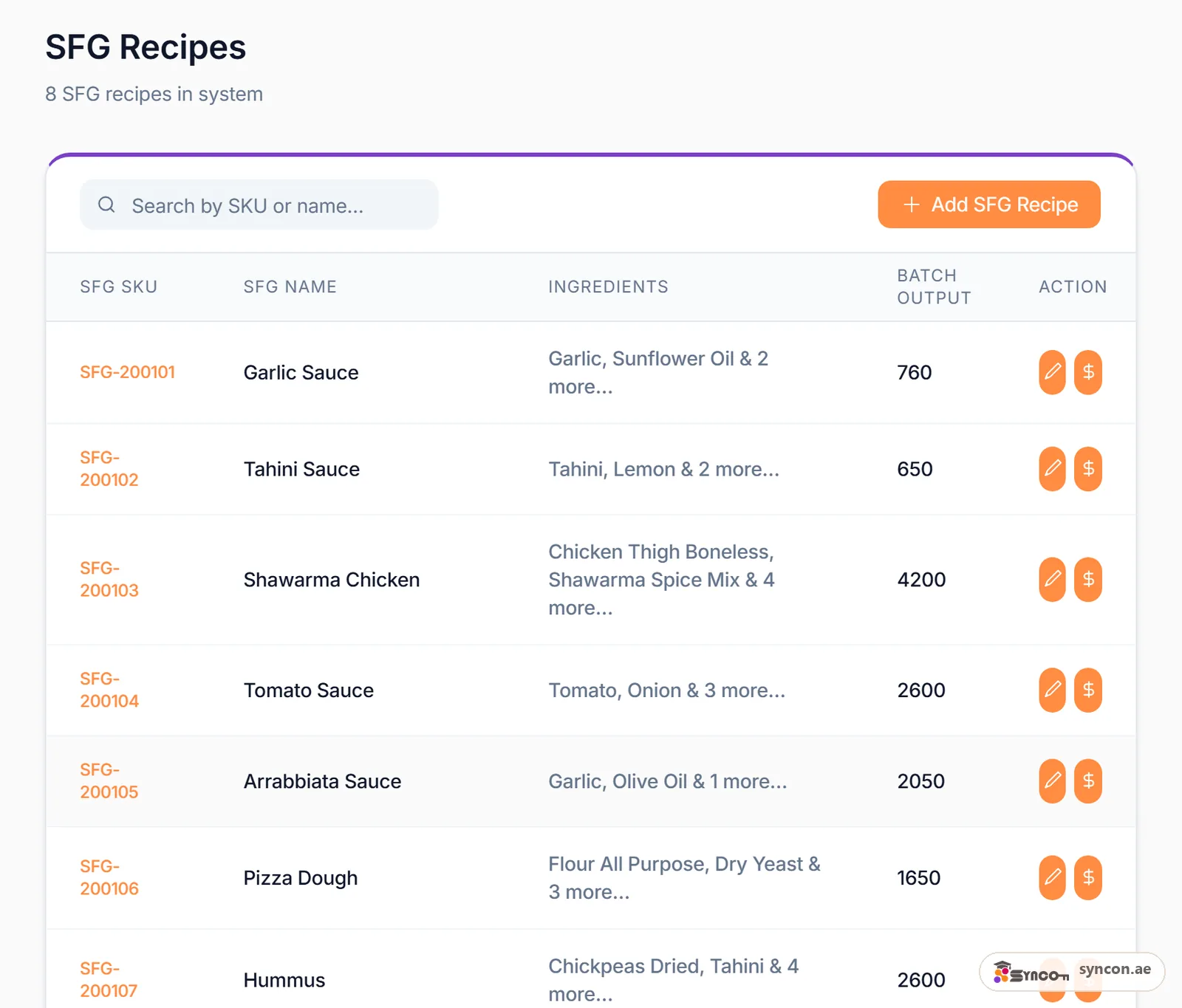
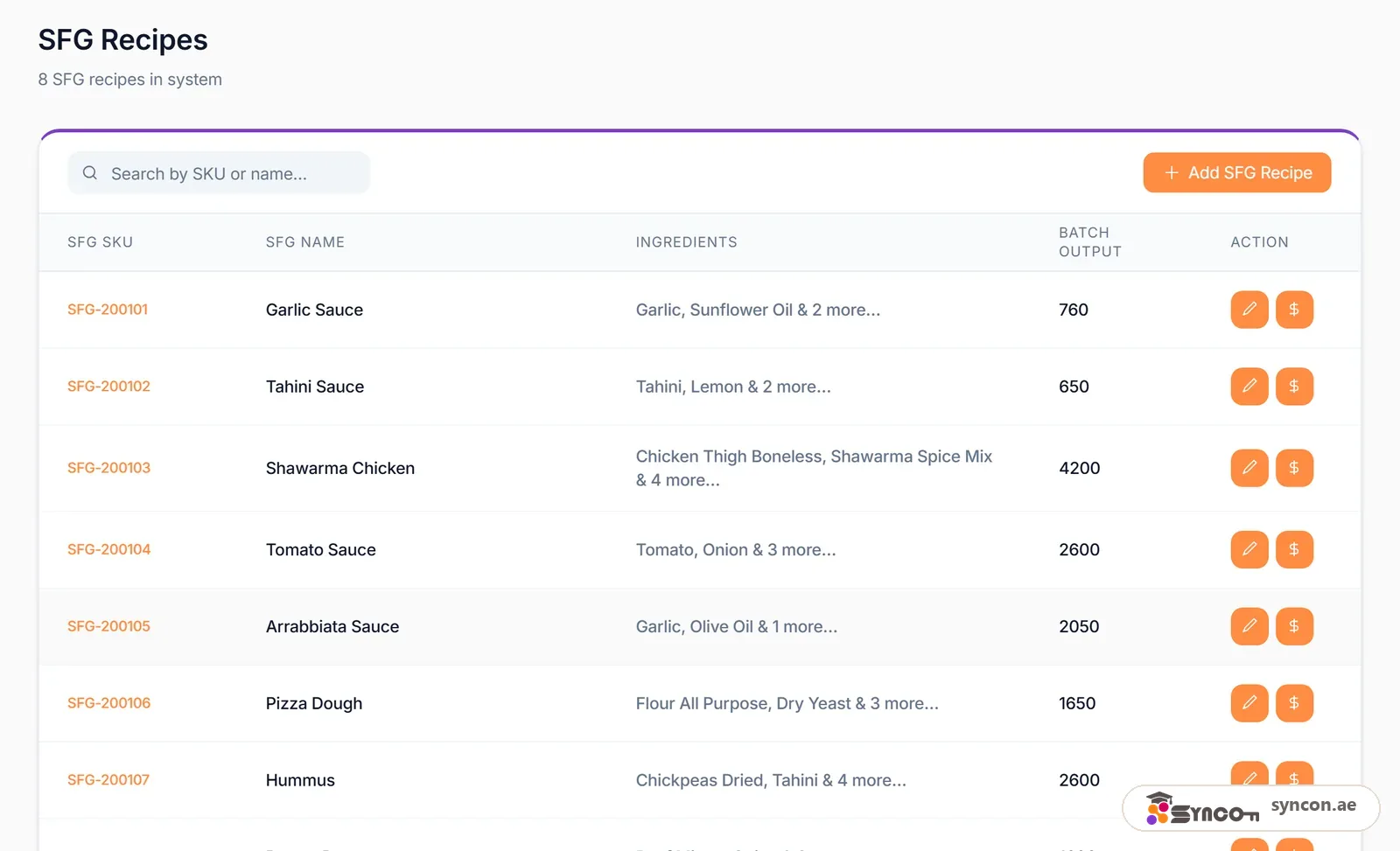
Prep items have their own list of batch recipes, separate from the dishes. In the demo kitchen there are eight: garlic sauce, tahini sauce, shawarma chicken, tomato sauce, arrabbiata sauce, pizza dough, hummus and burger patties. Each one shows its main ingredients and its batch output, so the whole prep section of the kitchen is written down in one place.
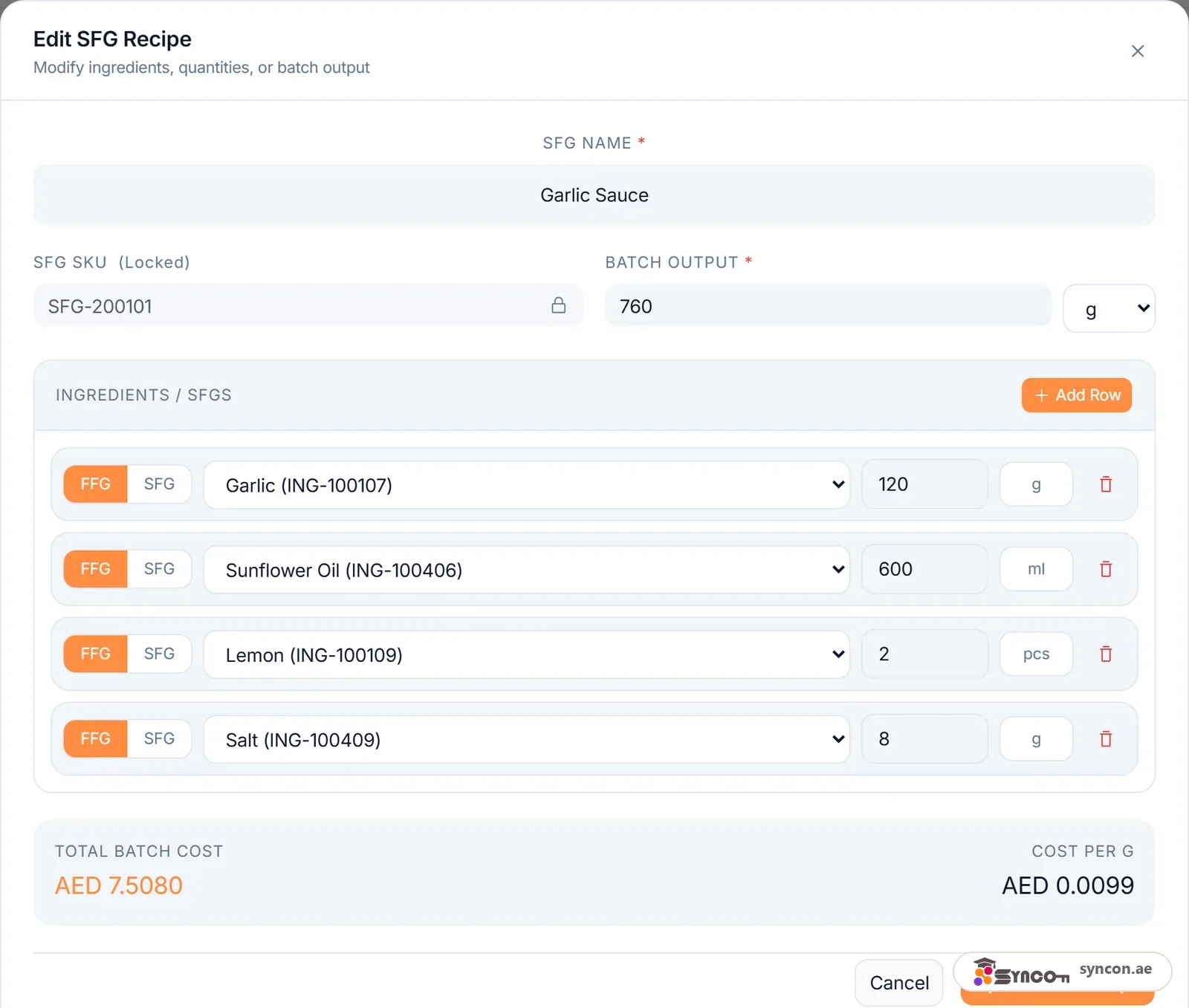
Opening a batch recipe shows exactly what goes in and what comes out. The demo kitchen's garlic sauce uses 120 g of garlic, 600 ml of sunflower oil, 2 lemons and 8 g of salt, and makes a batch of 760 g. The screen adds up the total batch cost, AED 7.51, and works out the cost per gram, AED 0.0099. Because dishes such as the shawarma plate use the garlic sauce as an ingredient, that cost per gram is what their own cost is built from, and a change to the batch recipe reaches every dish that uses it.
Learn the full method in الوصفات والتكلفة والتشغيل اليومي.
The screens above are from
Restaurant operating systemsyncon.ae/portfolio/operating-system(opens in a new tab)