Portion control in restaurants: weigh it once
Portion control in restaurants starts with a weighed recipe. Set exact meat weights, give cooks the right tools, and protect your most expensive dishes.
SyncOn team · 21 Oct 2026 · 4 min read
During the Friday dinner rush, a grill cook grabs an extra handful of lamb shoulder because the Mixed Grill Platter looks a little bare on the pass. The guest is happy, the ticket clears, and nobody notices that the kitchen just gave away meat that was never priced into the menu. Portion control in restaurants stops that silent leak by replacing guesswork on the line with exact, weighed recipes.
In short
- Write every recipe in exact grams, millilitres or pieces, starting with your most expensive dishes.
- Weigh costly proteins during morning prep so line cooks only grab pre-portioned packs during service.
- Spot-check five plates on the pass every week against their written recipe weights.
Why portion drift hurts your kitchen
Portion drift quietly drains money between the supplier invoice and the dining room table, one generous plate at a time. When supplier prices climb and menu prices cannot rise any further, the kitchen's only real protection is making sure the weight on the plate matches the weight in the costing sheet. If a cook adds extra lamb or chicken by eye, your actual vs theoretical food cost splits apart even when every delivery was checked at the back door.
Inconsistent plates also confuse your regular guests. A diner who received a heavy platter last week feels short-changed when a normal portion arrives tonight, while the table next to them wonders why two identical orders look different. Keeping every serving identical is what makes a dish reliable enough to order every week.
How to set and hold exact portions
Setting exact portions means weighing the dish once with the head chef, writing those numbers down, and giving the line the tools to repeat them at speed. Start with the dish that carries the highest recipe cost on your menu, because a small slip on a heavy meat platter costs far more than an extra pinch of herbs on a salad.
- Weigh and record the master recipe. Cook the dish the way you want it served, weigh every raw ingredient in grams, and lock those numbers into a standardized recipe that every branch shares.
- Pre-portion the expensive proteins before service. Nobody has time to zero a digital scale twenty times during a busy dinner peak. Have the morning prep team weigh lamb shoulder, chicken breast and beef mince into individual portion bags or trays so the grill cook simply opens one pack per order.
- Match the ladle or scoop to the recipe. For sauces, rice and sides, give the station a ladle or scoop that holds the exact gram weight required. When the 60 g garlic sauce portion matches a single level scoop, the cook cannot accidentally double it.
- Check the pass and listen to the cooks. Once a week, put a finished plate back on the scale before it goes out. If every cook is adding more rice or meat than the recipe says, check whether the plate itself is too large and makes the standard portion look sparse.
When you know how to calculate food cost from these exact weights, you can also test what happens to a dish's cost before you change a portion size on the menu.
How this looks in SyncOn
The Edit Recipe screen shows every ingredient inside one dish along with its item type, exact quantity and unit of measure.
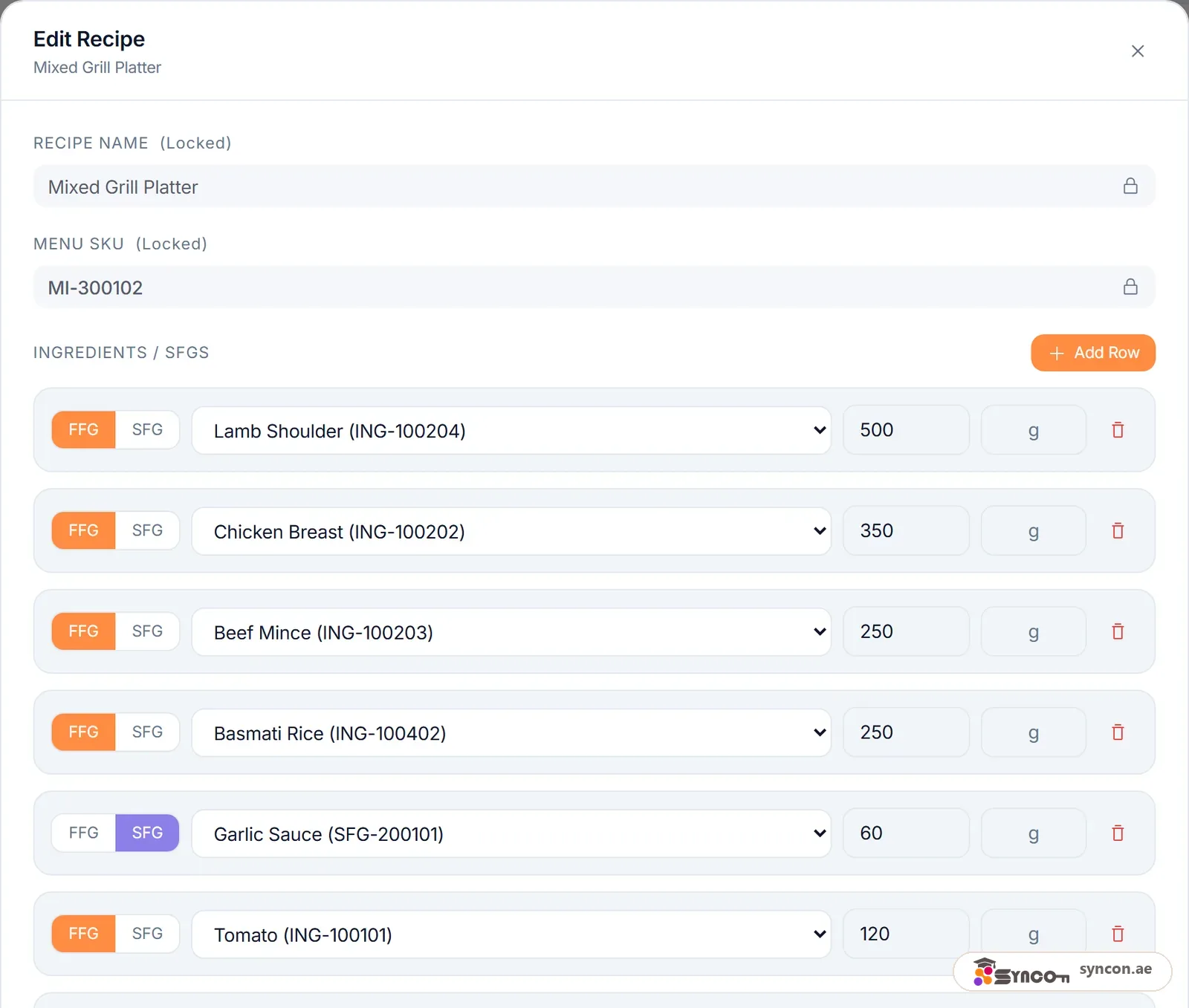
In the demo kitchen, the Mixed Grill Platter is locked to menu SKU MI-300102 so its name and code stay matched to the point of sale. Each line marks whether the item is a finished food good (FFG, a raw ingredient bought from a supplier and used directly) or a semi-finished good (SFG, a batch item prepped in-house, like a sauce). Looking down the rows, the manager sees the exact weights the grill and pass must follow:
- Lamb Shoulder: 500 g
- Chicken Breast: 350 g
- Beef Mince: 250 g
- Basmati Rice: 250 g
- Garlic Sauce: 60 g
- Tomato: 120 g
The two biggest meats alone—500 g of lamb shoulder and 350 g of chicken breast—add up to 850 g per platter. Alongside another 250 g of beef mince on the same order, those exact weights show the head chef immediately why the three meats must be pre-weighed on a scale during morning prep rather than judged by hand over the charcoal.
The Recipes screen shows all 25 menu SKUs with their ingredient counts, recipe types and calculated recipe costs.
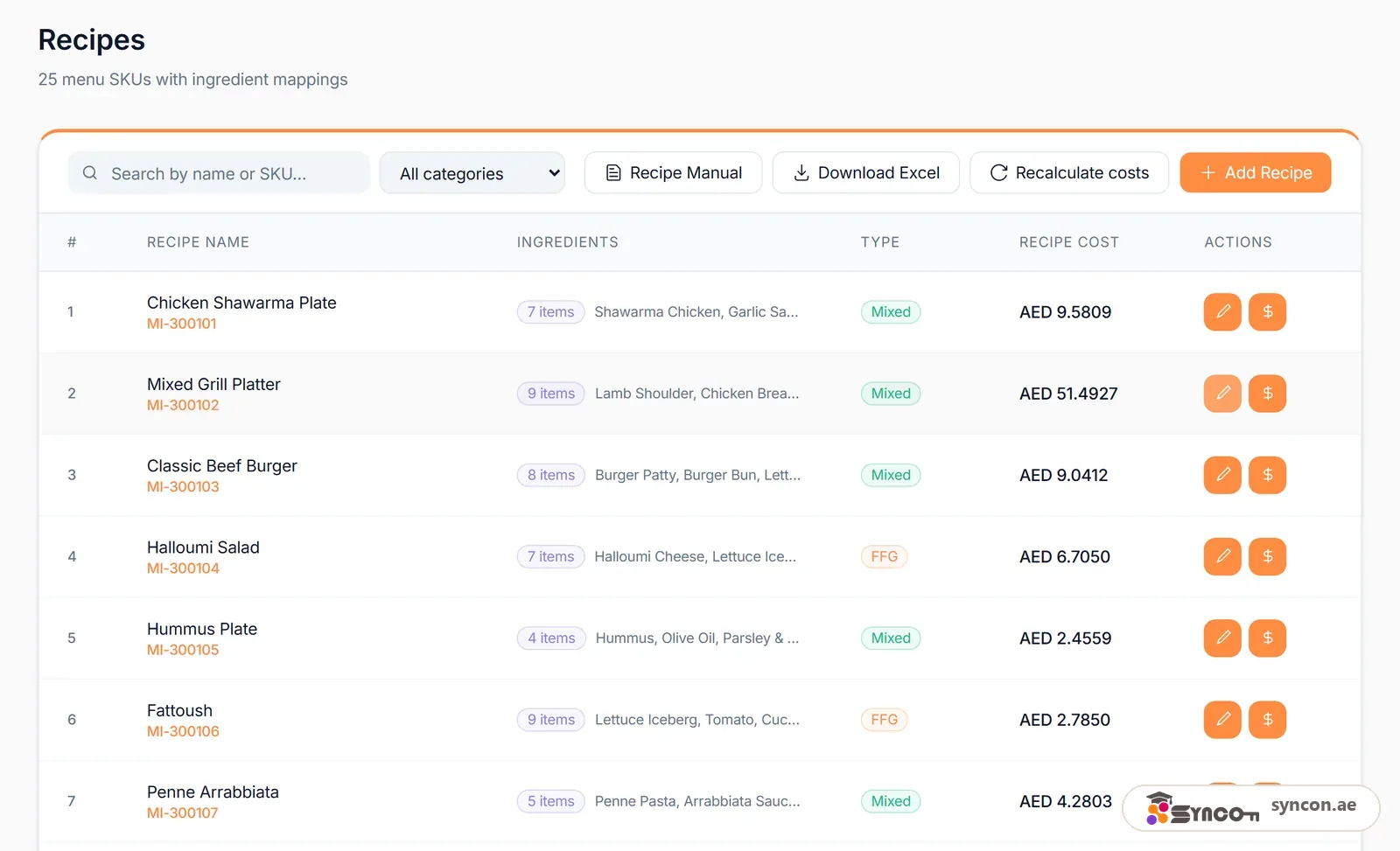
Each row labels the dish as FFG (built only from direct ingredients) or Mixed (combining direct ingredients with in-house prep items), and shows the exact recipe cost in AED based on the written portions. Here the manager can sort mentally by what is at stake on the line:
- Mixed Grill Platter (9 items): AED 51.49
- Chicken Shawarma Plate (7 items): AED 9.58
- Classic Beef Burger (8 items): AED 9.04
- Halloumi Salad (7 items): AED 6.71
The Mixed Grill Platter at AED 51.49 costs AED 41.91 more to put on the pass than the Chicken Shawarma Plate at AED 9.58. If a manager wants to see the effect of changing a portion weight, they click the orange pencil icon to edit the gram amount in the recipe and use Recalculate costs to see the new plate cost right away.
Learn the full method in الوصفات والتكلفة والتشغيل اليومي.
The screens above are from
Restaurant operating systemsyncon.ae/portfolio/operating-system(opens in a new tab)