Supplier management for restaurants: the basics
Supplier management for restaurants: one approved list, complete records, written orders and regular reviews, so prices and quality stay under control.
SyncOn team · 21 Oct 2026 · 3 min read
The usual vegetable supplier doesn't answer, so the chef calls a friend of a friend. The tomatoes arrive, nobody asks for a VAT number or any company documents, and the invoice comes on a sheet of paper with a phone number. A month later the accounts team can't match the invoice to anything, and nobody remembers what price was agreed. Supplier management is the routine that stops this from happening.
Why it matters
Suppliers decide more of a restaurant's results than most owners realise. The price per kilo sets the food cost of every dish. Reliability decides whether dishes are available on a busy night. Quality decides whether the food tastes the same every week.
When suppliers are managed by habit, problems hide. Prices drift up a little each month. Two branches buy the same item from different suppliers at different prices. Documents are missing when the auditor or the authorities ask for them. And when a supplier lets the kitchen down, there is no record to show it happened before.
Supplier management also strengthens your position when prices rise. A supplier who knows you track every order, compare prices and pay on time has every reason to negotiate. A supplier who knows you order from whoever answers the phone has very little.
Good supplier management doesn't mean many meetings or complex contracts. It means a short list of approved suppliers, complete records for each, every order made in writing, and a regular look at how each one is really performing.
What good practice looks like
- Keep one approved list for every branch. Each supplier with a code, the correct legal name, a contact person and phone number, and the categories they supply.
- Collect the documents up front. The VAT registration certificate, the company's trade registration and any food safety certificates you need, on file before the first order, and renewed before they expire.
- Order only from the list. A new supplier joins the list first, with its documents, then receives orders. No exceptions for emergencies; an emergency is when mistakes happen.
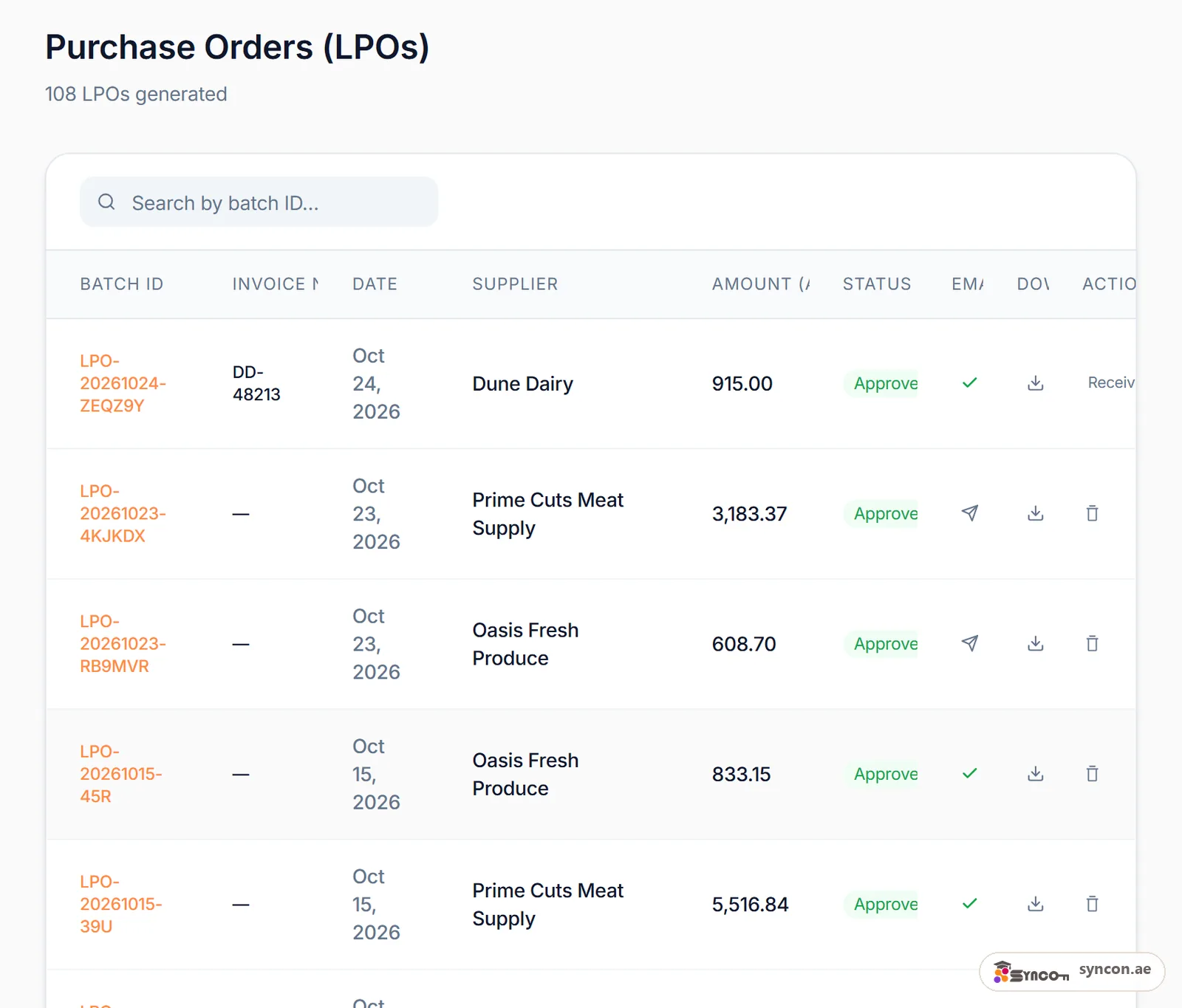
- Put every order in writing. A numbered restaurant purchase order for every delivery gives you something to check the goods and the invoice against.
- Review each supplier regularly. Every few months, look at what you ordered, what was late or short, and how prices moved. Keep the good suppliers close and have a direct, friendly conversation with the others before looking elsewhere.
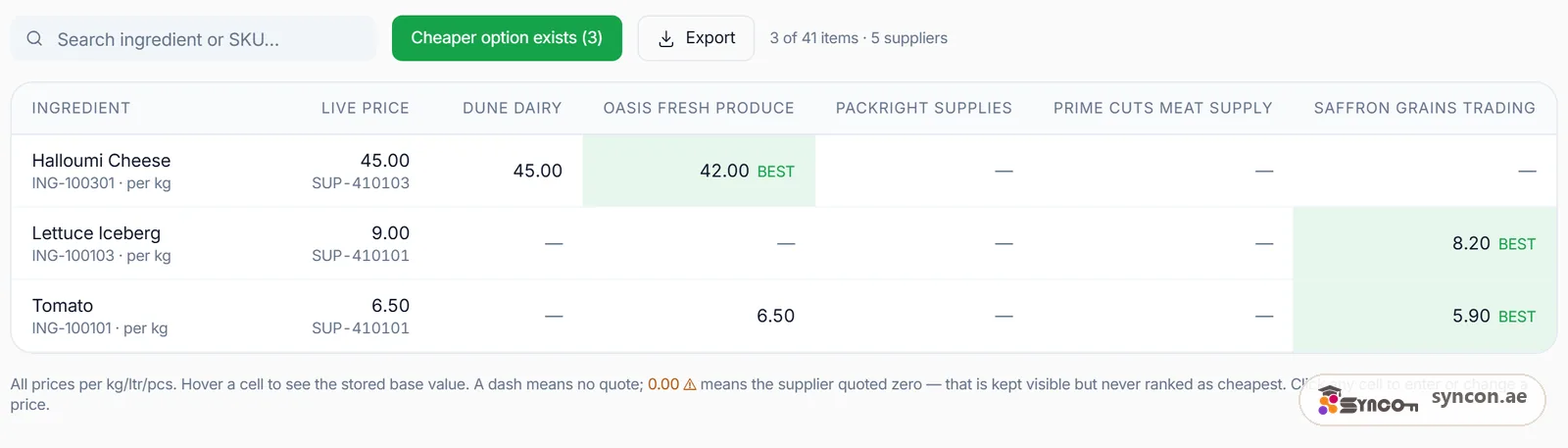
- Compare like with like. When two suppliers offer the same item, compare the price per kilo or per piece, not per box of a different size.
- Keep a second option for key items. For meat, vegetables and anything you can't serve without, know who you would call if the main supplier failed. Test that second option with a small order now and then, so you know their quality before you need them.
How this looks in SyncOn
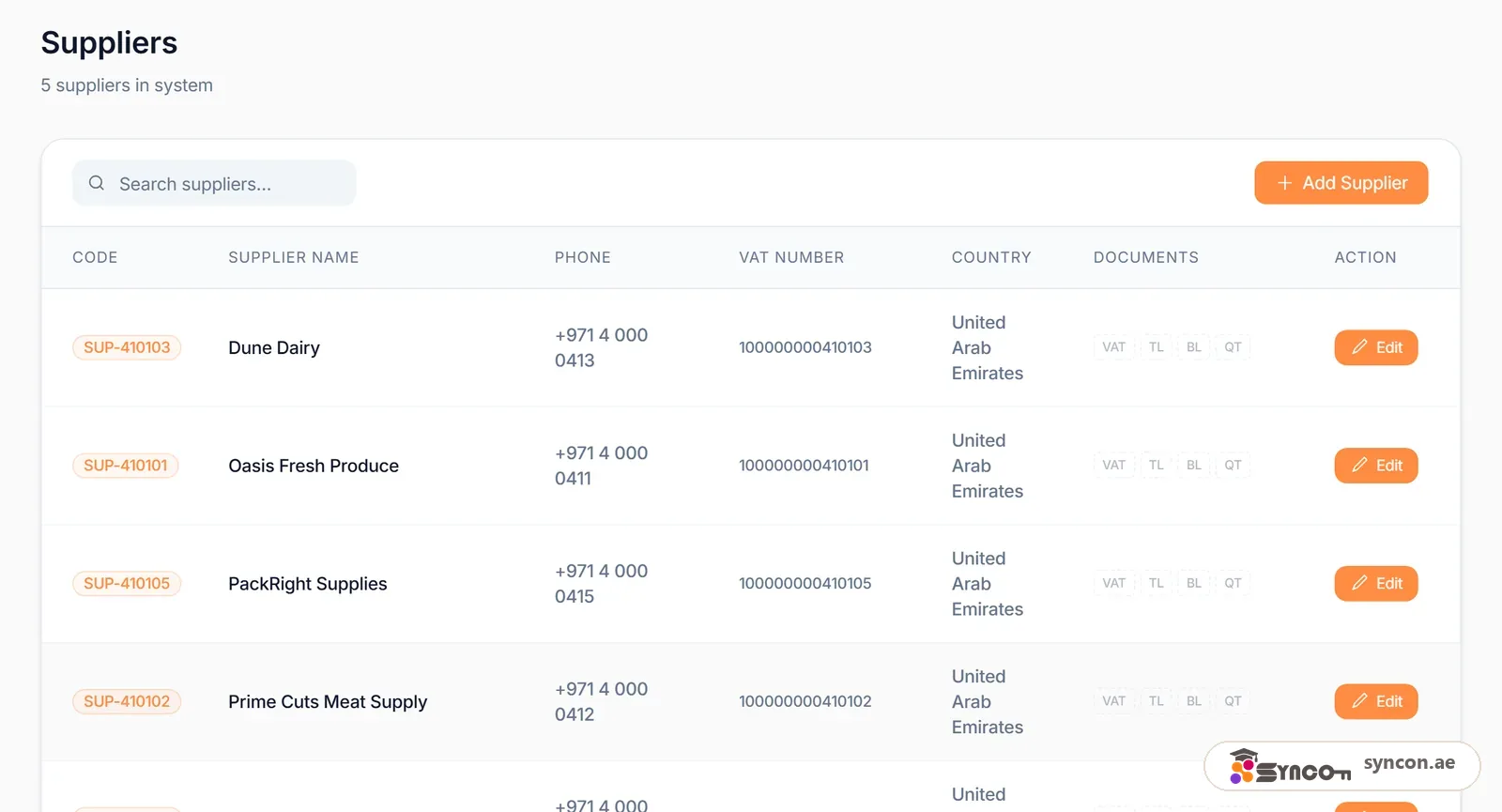
All suppliers live in one list shared by every branch. The demo kitchen has 5, each with a code, phone number, VAT number and country, and four document slots labelled VAT, TL, BL and QT, so missing paperwork is visible at a glance rather than discovered during an audit.
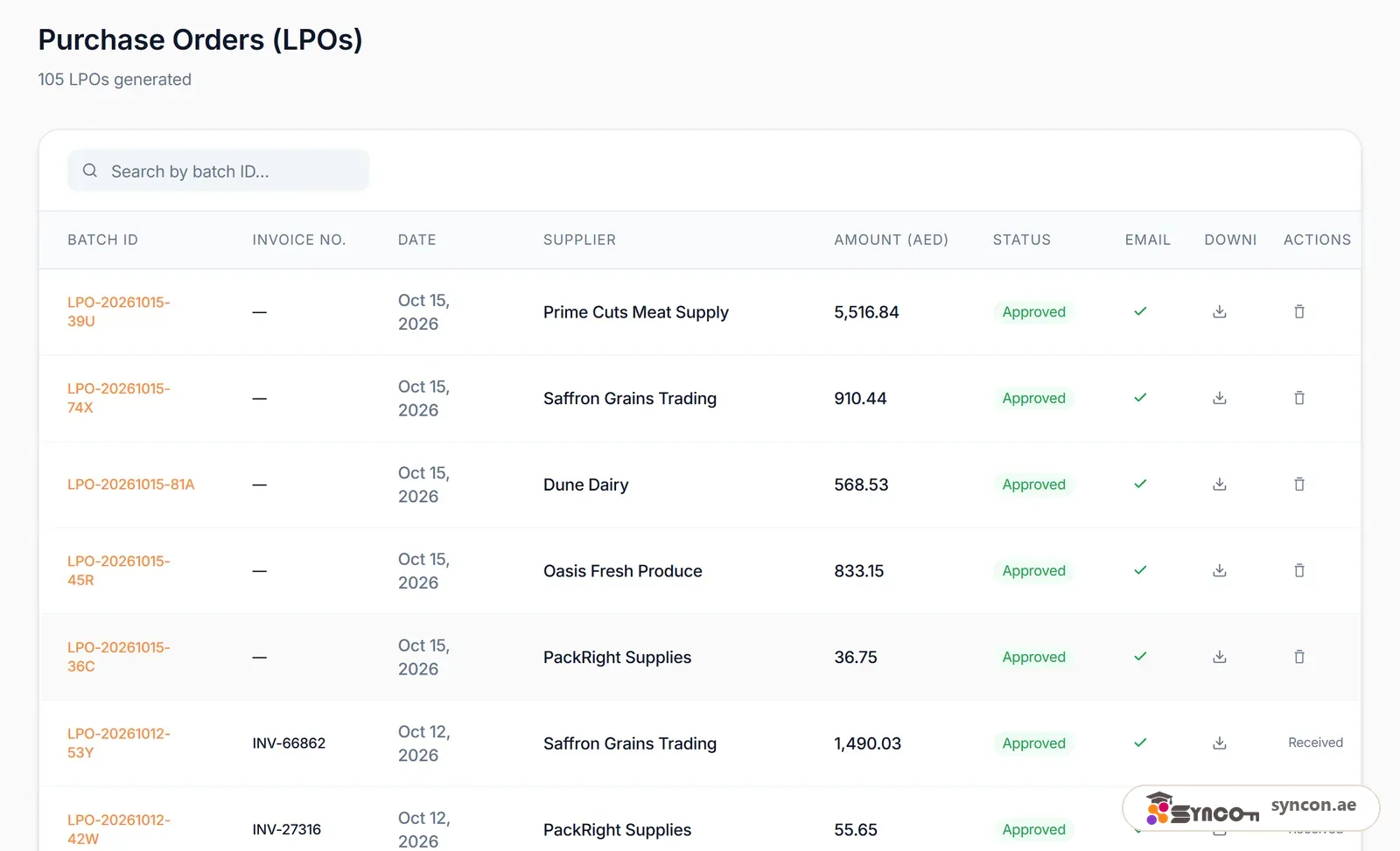
Every order goes to one of those suppliers as a numbered LPO, with its date, amount and status. The demo kitchen has 105 of them. On 15 October it ordered AED 5,516.84 from its meat supplier and AED 833.15 from its vegetable supplier, among others. Over a few months, this list is the record a supplier review is built on: who was ordered from, how often, and for how much.
Learn the full method in الشراء والنقد والرقابة.
The screens above are from
Restaurant operating systemsyncon.ae/portfolio/operating-system(opens in a new tab)