Sales mix: what it means for your menu and kitchen
Sales mix is each dish's share of all the plates you sell. Read it well and it tells you what to prep, what to stock and what to change on the menu.
SyncOn team · 21 Oct 2026 · 3 min read
Ask a chef which dish sells the most and you will get a confident answer. Ask which dish is fifth, or what share of all plates the top two make up, and the answer becomes a guess. That share is your sales mix. Yet those guesses decide how much is prepped every morning, how much stock is ordered, which dishes new cooks learn first and where each dish sits on the menu.
Why it matters
In most restaurants a small group of dishes carries a big part of the day. The rest of the menu is a long tail: dishes that sell a few times a day, or a few times a week. Both matter, but in very different ways.
The best sellers decide whether service runs smoothly. If they run out, if they come out late, or if they are made differently by each cook, the whole night suffers. They deserve the most prep, the most training and the most consistent recipes.
The long tail decides how complicated the kitchen is. Every slow dish still needs its own ingredients on the shelf, its own prep, its own space in the fridge and its own line in the training. Some of those dishes are worth it. Some are only there because nobody checked.
The sales mix, each dish's share of all the plates sold over a period, makes both of these visible. To work it out, divide the plates sold of one dish by all the plates sold in the same period. It replaces the chef's impression with a list everyone can read.
What good practice looks like
- Look at shares, not only quantities. "Ten percent of everything we sell" is easier to plan with than a raw count, and it can be compared month to month.
- Use a long enough period. A month or more, so a single event or a slow week doesn't change the picture.
- Prep and order for the top of the list. The best sellers should never run out. Base their daily prep and their stock levels on their real share of sales. More on protecting them in best selling menu items.
- Train in the same order. New cooks should master the dishes that make up most of the plates before anything else.
- Give the best sellers the best place on the menu. Guests look first at the top and the middle of a page, and a dish that already sells well earns that spot.
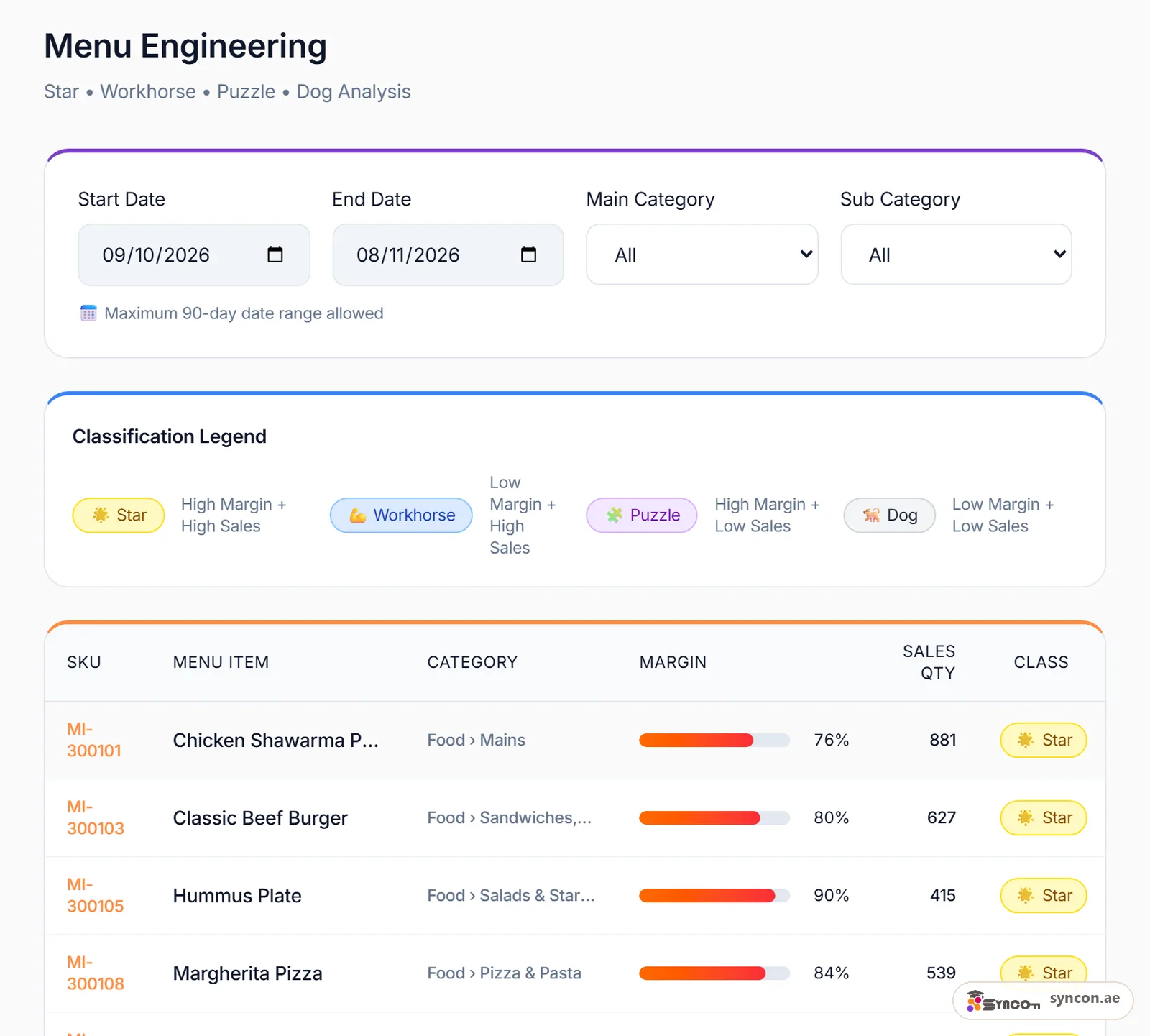
- Question the tail. For each slow dish, ask what it brings: a loyal group of guests, a good margin, a reason to visit. If the answer is nothing, it may be time to remove it. The menu engineering matrix adds each dish's margin to the same picture.
- Watch the mix move. A dish whose share keeps falling month after month is telling you something about taste, price or quality. Catching it early leaves time to fix the recipe or the price before guests stop ordering it.
How this looks in SyncOn
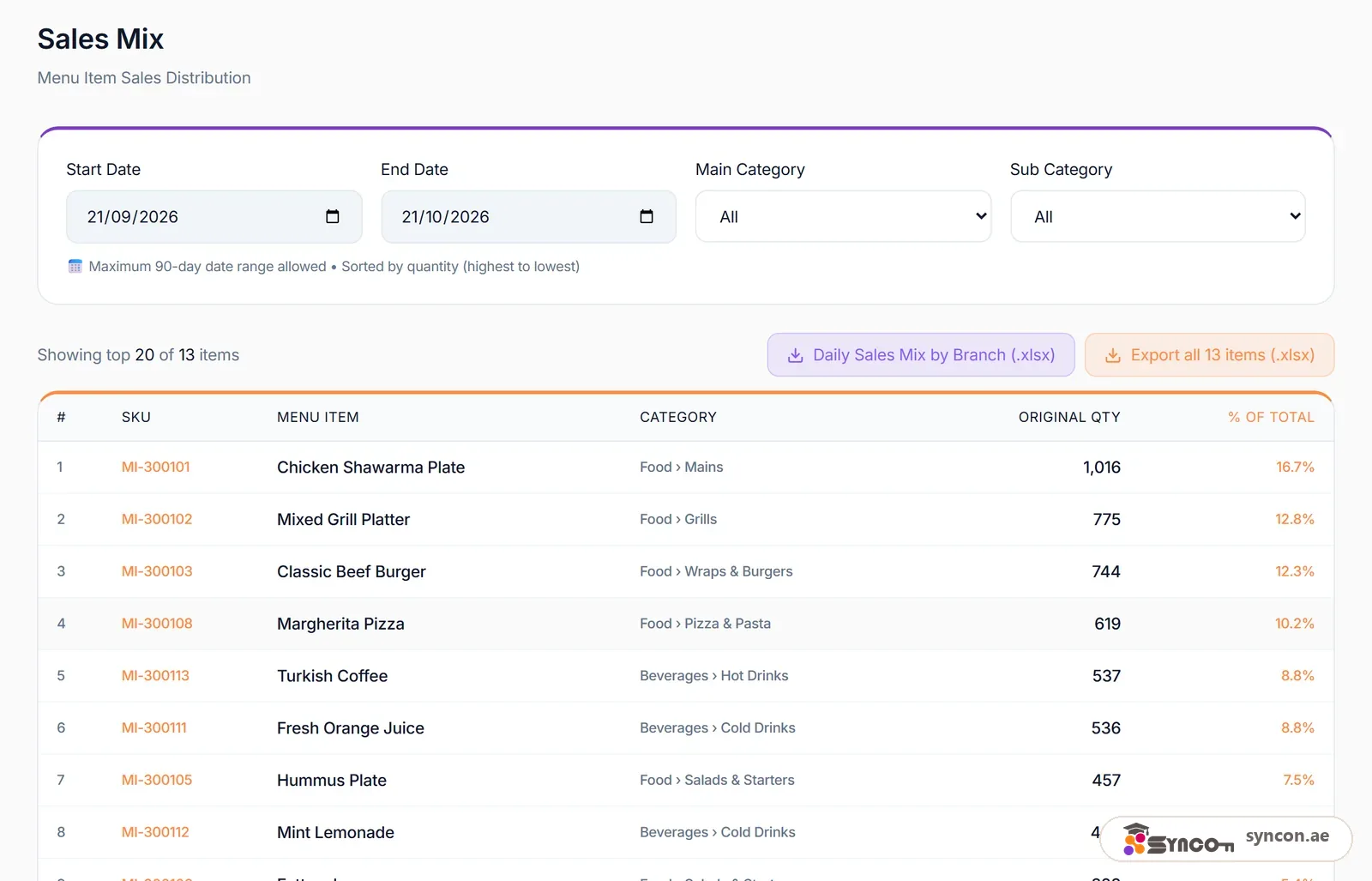
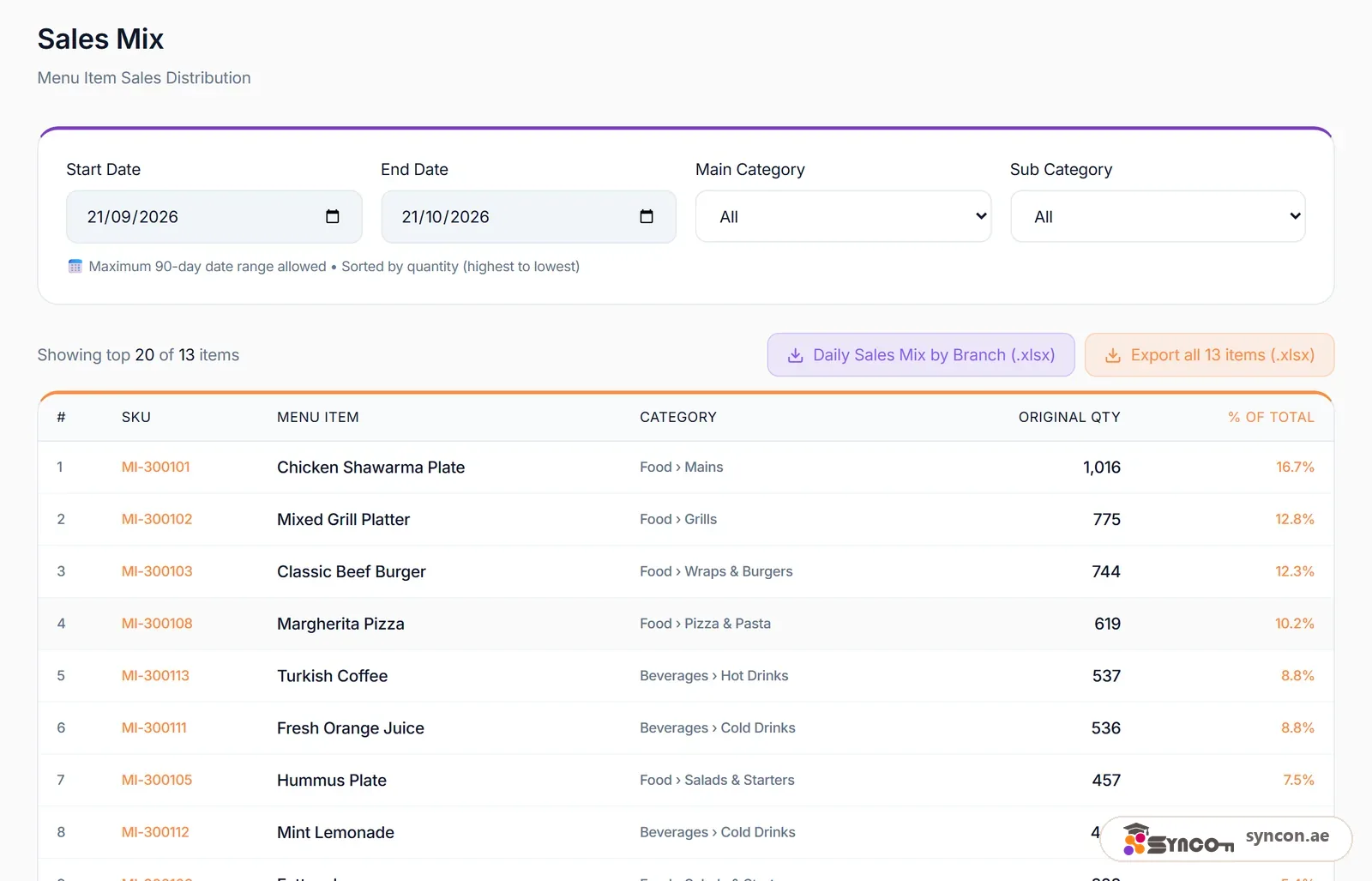
The sales mix report lists every menu item for the dates you choose, up to a 90-day range, sorted from the most plates sold to the fewest, with each dish's share of the total. In the demo kitchen, over the month from 21 September to 21 October, the chicken shawarma plate leads with 1,016 plates, 16.7% of everything sold. The mixed grill platter follows at 12.8%, so the top two dishes together make up 29.5% of all plates. The classic beef burger and the margherita pizza come next, and on the drinks side Turkish coffee and fresh orange juice each take 8.8%.
The report can be narrowed to one main category or sub category, and two buttons download it as a spreadsheet: all items for the period, or the daily sales mix by branch. That makes it easy to take the list into a prep meeting or compare how the same dishes sell in different outlets.
Learn the full method in التقارير والتخطيط والنمو.
The screens above are from
Restaurant operating systemsyncon.ae/portfolio/operating-system(opens in a new tab)